Baroness Nuala O’Loan has said that the Catholic Church leadership can do more to promote the work of justice across the island. Speaking to The Irish Catholic she said “a lot more can be done to encourage Catholics into policing, the aim of which is to protect people and property from harm, something which is entirely consistent with Church teaching.” Ms O’Loan was the first Police Ombudsman for Northern Ireland.
She added: “The Church and the Irish government could also do more to promote justice north and south.”
The Church, she said “could encourage the Irish Government to work harder to create more effective ways to carry out legacy investigations and facilitate information recovery in murders which were planned and executed both sides of the border. This is vital to grow trust in policing and the commitment to peace.”
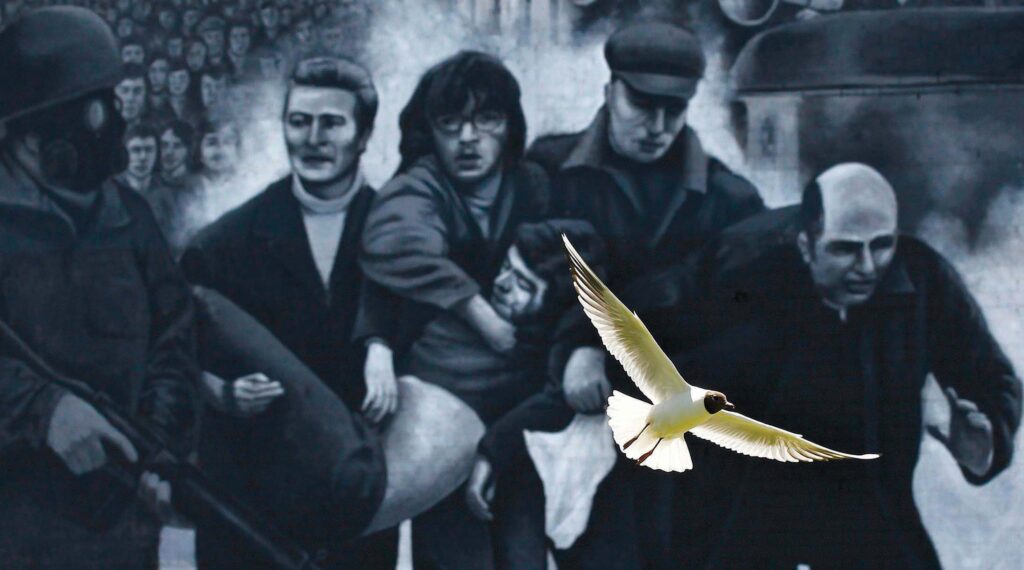
Ms O’Loan’s remarks come in the wake of last week’s verdict acquitting a former British soldier of murder charges relating to Bloody Sunday.
Last week, a Belfast judge found Soldier F not guilty of the murder of William McKinney and Jim Wray nor of five attempted murders committed on January 30, 1972.
Judge Lynch, who acquitted Soldier F, accepted that “Shortly after 4pm on January 30, 1972, a number of soldiers, members of the Parachute Regiment, entered Glenfada Park North and immediately, or almost immediately opened fire with high velocity weapons at unarmed civilians at a distance of 50 metres or less. This resulted in two persons, Messrs McKinney and Wray being murdered and four (possibly five) others unlawfully wounded.”
However, he concluded that “the evidence presented to the court fails to reach the high standard of proof required in a criminal case,” and therefore found the accused not guilty on all counts.
Ms O’Loan said she rejected the argument that now says stop these prosecutions because they are unlikely to succeed. Pointing to a recent conviction in England for a murder committed 58 years earlier, O’Loan writes: “If it is possible, as it is, to bring someone to justice after 58 years in England and Wales, then it should not be made impossible to do the same thing in Northern Ireland, just because the murders in question were committed during the Troubles and those charged were soldiers.”
“The work of justice demands that in so far as is possible, the Rule of Law continues to operate, as we work our way through the processes of dealing with the past,” she said.