Readers of this newspaper will be familiar with the preparations for a National Pre-Synodal Assembly to be held in Kilkenny on Saturday, October 18. They will have perhaps perused some of the content of the preparatory document, ‘Baptised and Sent’, carried in this newspaper, and also the encouraging and helpful critique by Fr Gerry O’Hanlon SJ. In advance of the meeting in Kilkenny, which will bring together about 250 people from every diocese in Ireland, and from the various religious congregations, movements, and associations of the Church in Ireland, it is timely to ask what makes this event important in the life of the Church in Ireland.
The process is delivering
The initiative of the Bishops in 2021 in announcing a synodal pathway for the Church in Ireland leading to a National Synodal Assembly in 2026 is on course. Despite the challenge of the on-going pandemic at the time, and the universal Synod subsequently announced by Pope Francis, the Irish Synodal Pathway is moving determinedly towards a National Synodal Assembly in 2026.
In keeping with the experience of the universal Synod on Synodality, the Irish Synodal Pathway is very much learning by doing. By remaining embedded in the universal Synod, we benefitted from the experience of being ‘in synod’: we had to learn to listen, to discern what was being said, and to find consensus around priorities for action; synodal teams had to be formed to embed synodal practices at local level; the guidance coming from the universal Synod had to be integrated into our process. The sense is of a process that is organic and growing rather than something ready-made or pre-determined.
What is proposed is what was heard
The delegates in Kilkenny on October 18 can gather in the confidence that, what is being proposed as priorities for action in the life of the Church in Ireland is what was heard and discerned through a listening process that was patient, open, and prayerful. Typically, the process of discernment involved circling back to make sure that what was heard was what was said, and the Bishops, with whom ultimate responsibility for the life of the Church in Ireland rests, carried out their own discernment and further discerned what was coming through from the Conversations in the Spirit at local level. What was heard is a yearning for a Church which could be fully alive through the flourishing of the baptismal identity, dignity, and missionary calling of its members while also embracing humbly and honestly the legacy of pain and trauma that is carried by so many of the baptised.
From the fire of anger that has been directed at the Church, a small quiet voice has emerged”
This rings as truth – a godly truth! We can of course point to the limitations of the process: we were learning as we went along … the Conversation in the Spirit method has limitations … not everyone participated … our outreach was not as wide as it could have been … it lacks theological, sociological, historical, and cultural analysis … we struggled to shift our conversation from what ‘we’ want to what ‘God’ wants.
And, of course, some will feel that the issue which is of most concern to them is not reflected in what was discerned or in the priorities identified. However, like Elijah at the mouth of the cave, from the noise of the wind of change, from the earthquake that is toppling so much of the Church, and from the fire of anger that has been directed at the Church, a small quiet voice has emerged and perhaps we can all say, “God is in it”.
Not just a journey – an exodus
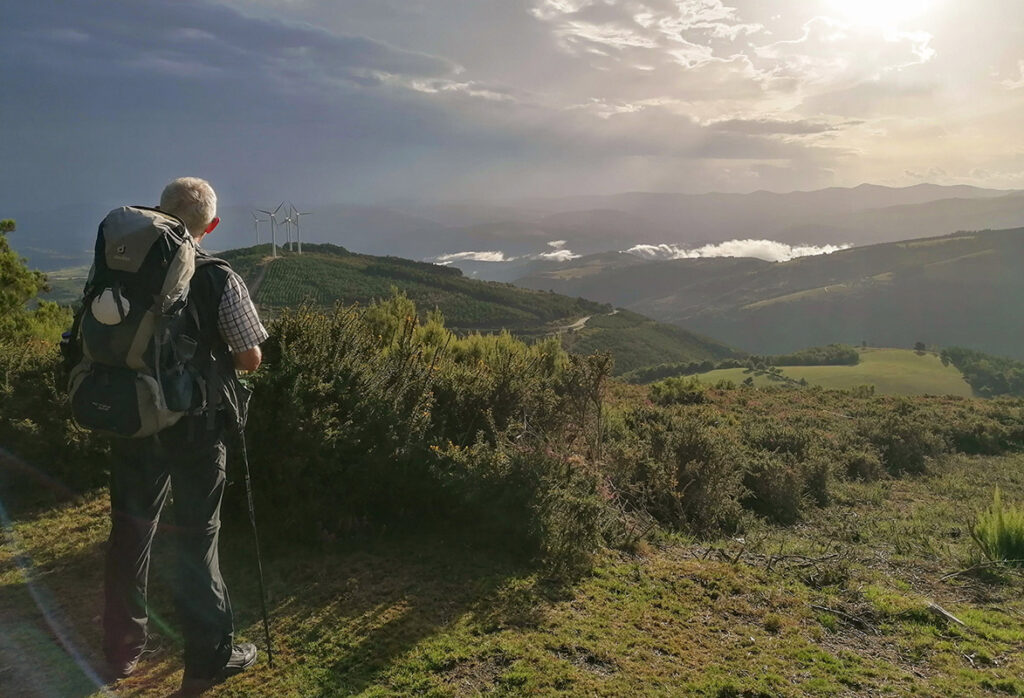
The Irish Synodal Pathway is often described as a journey that we take together. This journey must continue beyond 2026 as we learn to be a more synodal Church and address together new priorities as they emerge. However, we must be able to recognise this journey in the emblematic journey of the People of God which is the exodus. Like the people of Israel passing through the waters of the Red Sea, we are now setting out on our journey together by passing through the waters of Baptism. We are leaving behind something: structures and habits to which we are enslaved but which are no longer life-giving or sufficiently missionary in their outreach; a way of being a people which no longer offers a sense of belonging to many; a weakened sense of our identity and message that struggles to engage with the culture.
A synodal pathway can only have meaning if it gives the initiative to God and allows Him to lead us to a new way of being the Pobal Dé. At times on this exodus journey, we will surely look back with nostalgia and long for “the onions of Egypt” but knowing that our journey is an exodus, that will be the moment to feed on the manna of God’s word and to be guided by the pillar of paschal fire and the cloud of the Spirit.
The People of God
It is often remarked that the Vatican II image of the Church as the People of God has not yet been fully embraced. However, many are now beginning to see synodality as the way towards making this ecclesiological image a reality. The pre-synodal assembly in Kilkenny desires to be an important step on the exodus journey towards making it a reality in Ireland.
Fr Declan Hurley is Chair of the National Synodal Team