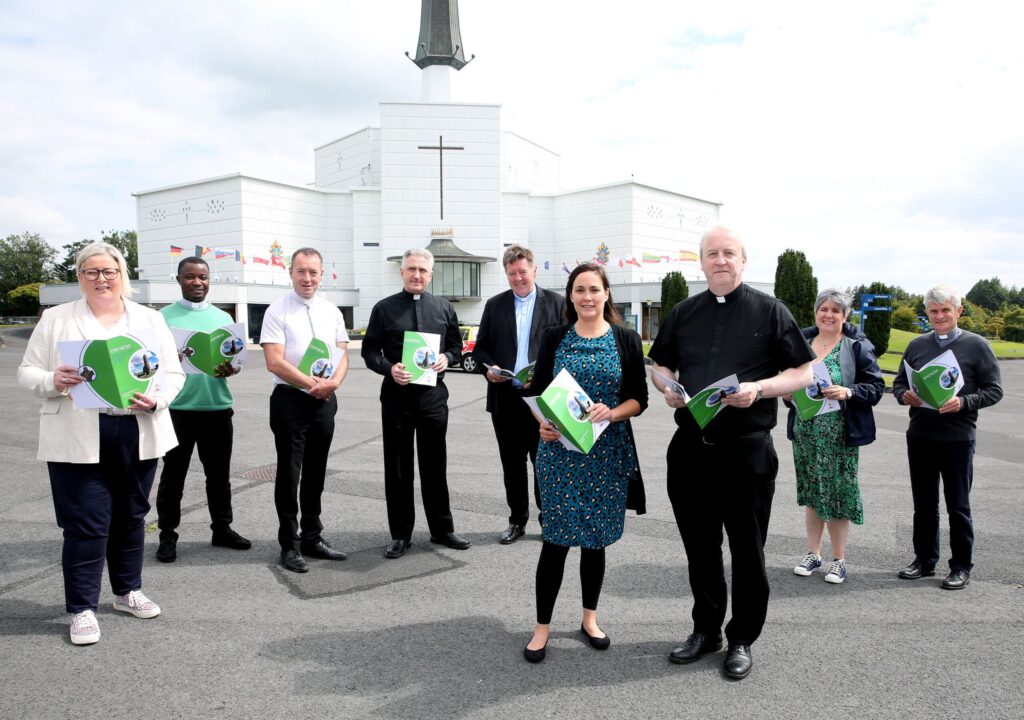
The Preparatory Document for the Pre-Synodal Assembly of the Synodal Pathway of the Catholic Church in Ireland has been released. Called ‘Baptised and Sent’ it lists the themes that will be discussed at the Assembly in Kilkenny Convention Centre on Saturday, October 18, 2025.
We list the themes here directly from the document.
Themes emerging from the Spring gatherings
The Synod organisers produced a synthesis of the submissions received from the Spring Gatherings, offering what they call “a faithful account of the hopes, concerns and priorities voiced by the People of God, the Pobal Dé, in Ireland.”
As with previous syntheses prepared by the Irish Synodal Pathway, the themes and priorities have been listed in alphabetical order.
The most dominant themes: What people talked about most
Baptism as the foundation of identity and mission
Baptism was repeatedly cited as a reminder that every member of the Church has a value and role. “There is growing concern that the importance of Baptism is being overlooked. We must rediscover and deepen our understanding of our baptismal calling.” This vision of Church identity, anchored in baptism, was seen as foundational for dignity, mission, and inclusion.
“Baptism is clearly seen as the number one priority. It is an entry point to a life of faith, a gateway to mission, and the root and foundation on which to build a Christian life.” Another submission affirmed that “Baptism is the foundation of our faith-life and calls us to share our gifts within the Church, that is: laity and clergy sharing responsibility.”
A greater understanding of baptism was sought to support participation in ministry, inclusion of the so-called marginalised, and to recall the Church’s identity as the Body of Christ where all are equal in dignity and called to holiness. Some named it as the Sacrament of Initiation that “welcomes us into the family of Christ” and “opens the pathway to living a Christian life and serving the Church, whether as ordained ministers or as lay people.” Renewing this baptismal awareness was seen as essential to revitalising parish life and ensuring that “shared responsibility within the Church should emerge naturally” from this common foundation.
Belonging and inclusion at the heart of community
Belonging and inclusion appeared in nearly every conversation. The Church is perceived as struggling to welcome those on the margins, especially young people, migrants, LGBTQ+ persons, non-traditional families, those who have experienced relationship breakdown, those in second unions, those who feel judged or hurt, and those estranged from faith communities.
There is a deep desire for a listening Church that makes space for the wounded, those who are doubting, and those who feel on the margins. “Belonging brings caring, mercy, compassion and love. It is at the heart of who we are and builds community that belongs to Christ and is mutually beneficial to us all.”
Participants stressed that “a sense of belonging is fundamental for individuals within the Church community, linking it to family, education, and participation in faith.”
Shared responsibility is vital for the future of our Church. While it needs careful and gentle guidance, it is not optional and must progress steadily”
Some highlighted isolation, loneliness, and anxiety, and the marginalisation of many individuals and groups. Others insisted that welcome and inclusion must be more than an ideal, “embracing everyone, especially those who may feel marginalised, the LGBTQ + community, people with disabilities or those who feel disconnected from the Church.”
Belonging was described as an emotional need and a Gospel imperative linked to mission and evangelisation. As one contribution put it, “it helps people to take responsibility, links to engagement and active membership, and is key to people being open to a journey of faith.”
Co-responsibility and shared leadership
At the heart of the synodal conversations lay the continued call for co-responsibility; a vision of Church in which all the baptised share in leadership, mission, and ministry.
“Shared responsibility is vital for the future of our Church. While it needs careful and gentle guidance, it is not optional and must progress steadily.” Repeatedly named as key to the Church’s future, co-responsibility and collaboration were seen as “key to growing and maturing in faith, and…deemed necessary.”
Many stressed that it is “the only route to sustainability and needs to be addressed more fully by the Church authorities.” This theme was consistently linked to lay ministry, baptism, clericalism, and leadership reform. As one submission noted, “the number of clergy is declining and consequently the future of the Church will require increased lay involvement.”
Participants emphasised that the Church must not depend on priests alone; that “both laity and clergy are needed,” and that “for this to be meaningful, clergy must be willing to share responsibility, and the laity must be prepared to accept responsibility.” Only in this way, they said, “can there be true ownership of the Church by all its members, allowing the Kingdom of God to flourish more fully.”
Calls for shared responsibility were matched by recognition that laity must feel empowered and supported, with investment needed in faith formation and training for all – clergy and laity.
Faith formation, catechesis and religious education
Faith formation, catechesis, and religious education emerged as another pressing theme, revealing a hunger for deeper understanding of the faith and authentic living of the Gospel. Participants emphasised adult faith formation for all, as well as innovative youth catechesis rooted in lived discipleship. Schools, parishes, and families were all seen as crucial contexts though some tension existed regarding their respective roles.
Unless there is faith formation, all other aspects cannot be addressed”
Formation was seen as foundational for renewing the Church. “Faith formation brings us into personal contact with Jesus and is essential because the Church is the community of faith.” Many stressed it must be ongoing to nourish the faithful at all stages and that “faith formation is a top priority because it is foundational for enabling people to share their faith with joy.”
Others noted that “faith formation was…a key element in preventing disengagement from the Church” and that “unless there is faith formation, all other aspects cannot be addressed.” There was a strong call for formation equipping people for public witness, “vital to adult confidence in talking about their faith in public.” Several pointed to the importance of teaching, calling “for improved education, particularly for teachers, to ensure effective faith formation” and that “better-trained educators can empower parishioners with a clearer understanding of their beliefs.”
Family as the seedbed of faith
Concern for young people was echoed in reflections on the family as the primary context for faith transmission and as a pastoral space needing greater support. Families were seen as the key place where faith is passed on, with many emphasising the need for support in raising children in the faith. “Families were identified as the first educators of the faith, yet many feel unequipped or unsupported.” Family life was closely connected to baptism, formation, and belonging. Some called for stronger parish-school connections, insisting that “a greater emphasis needs to be placed on nourishing and supporting the faith in families, and in our schools.”
Several submissions linked family vitality to the Church’s vitality, warning that “without supporting families… the future vitality of the Church” would be at risk. Calls were made for resources, pastoral accompaniment, and parish structures prioritising diverse families.
As one group observed, “Family is at the heart of community, and its support is essential to sustaining the Church’s mission.”
Lay ministry is essential for parish life
Co-responsibility was closely linked with lay ministry, particularly the need for meaningful training, support, and recognition of lay leaders, especially women and young adults. Lay ministry
was recognised as essential, not only because of the declining number of clergy, but also to meet parish needs and to provide lay men and women with the opportunity to live out their baptismal call to mission and ministry. “The active role of the laity in ministry is vital for parish life,” one comment affirmed, while another called for “training and commissioning lay ministers to serve in pastoral care, catechesis, and liturgy.”
One group stating plainly, “lay people should be more involved in the decision-making of the Church” and another, “We need more lay-led services, especially in rural areas where priests are few.” Expansion of lay ministry was also seen as a corrective to clericalism, noting that “clericalism is a barrier to the gifts of the laity being recognised and used,” and that “greater humility and openness from clergy” is needed so that lay and ordained may truly work together in service of the Gospel.
Liturgy and worship renewal
People care deeply about the Mass and worship, but many felt liturgy needs to be more engaging, accessible, and beautiful. Calls for renewal were frequent, especially to help young people and newcomers feel connected: “Renewing our liturgy also featured prominently with comment on language, participation, involvement, singing and somehow connecting liturgy and the Word to life.” Liturgy was affirmed as central but often experienced as stale or disengaging, particularly for younger generations. Some expressed that “liturgy is important to everyone, but some people find it uninspiring and in need of renewal.” Others stressed “the need for more inclusive language, participation, and a sense of belonging through worship.”
Concerns included that “liturgical language and symbolism are often inaccessible or outdated, particularly for young people and those unfamiliar with Church traditions.” Several called to “review how liturgy is celebrated to ensure it supports participation, community, and mission.”
The underlying hope was for worship that is beautiful, relevant, and capable of drawing people into deeper communion”
Renewal was linked with lay participation: “people expressed a desire for more active involvement in liturgy, especially in music and lay ministries.” The underlying hope was for worship that is beautiful, relevant, and capable of drawing people into deeper communion.
Sexuality and LGBTQ+ inclusion
Many felt the Church needs to do more to welcome and respect LGBTQ+ people. There was a desire for open, honest conversation, grounded in the dignity of every person and shared baptismal identity, reflecting a growing awareness of how the Church speaks and acts in these areas shapes its credibility.
Calls for compassion, dignity, and pastoral care were persistent, though often entangled with tension. Some stressed the importance of belonging for LGBTQ+ persons, noting “discussions on sexuality revealed discomfort among some, but also a desire among others for the Church to be more compassionate and to listen to personal stories.”
Debate existed over emphasis and approach, with feedback noting that “on LGBTQ+ inclusion, some feared that categorisation increases marginalisation, while others called for explicit outreach.”
Women’s participation and leadership
Women’s participation in ministry and leadership drew strong support and frustration over slow progress. Many saw this as a matter of justice and credibility rooted in baptismal dignity and co-responsibility.
“Women – despite being central to the mission of Jesus, women’s role in the Church is diminished compared to their male counterparts – there is a need for equality, diversity and an increase in leadership roles for women.”
There was a strong and repeated call for women to be more fully included at every level of Church life. Some voiced, “progress [is] needed on equality. There was a strong expressed view by women and men that women do not have equal dignity in the Church,” and others affirmed that “the role of women in Church, and in society, needs to be looked at in relation to co-responsibility and ministry, and with particular emphasis on the use of inclusive language.”
It was noted that the subject of women keeps coming up. “This recurrence was felt to be action of the Holy Spirit.” Women’s voices in decision-making were highlighted as essential: it is critical that women make and are seen to make decisions at the highest level” and that “women need to be consulted by professional researchers to establish their attitudes to the Church.”
Young people and the future of the Church
In the context of belonging and inclusion, concern for young people was pronounced. Many highlighted the sharp decline in youth engagement. Strong calls emerged for creative outreach and meaningful involvement in liturgies, mission, and leadership.
“Young people specifically express a desire to belong, to have a home.”
Feedback repeatedly affirmed that “youth are the future of our Church” and that “youth should be a special mission of the Church.” Their absence was seen as an urgent challenge, with concerns for young men “educated by social media” and vulnerable to suicide. Youth engagement was not just about attendance but about listening to their experiences and creating opportunities for meaningful leadership. The call was for a Church where young people are active participants shaping its life and mission.
Other themes noted
Several other themes arose though they were less dominant in the overall conversations: Abuse, Care for Creation and Social Justice, Clergy, and Evangelisation and Mission. The theme of abuse was named as an ongoing wound, with participants calling for continued accountability and transparency, urging that “healing must remain a priority for those affected by abuse.”
Another gathering stressed that “the Church must acknowledge past wrongs openly and continue to create safe spaces for victims and survivors to be heard.” Care for creation and social justice were mentioned but seen as underrepresented, with some expressing disappointment that “Laudato Sì’ and the call to ecological conversion were barely mentioned,” urging the Church to integrate these concerns more fully into parish life. There was concern about declining numbers of clergy and the need for pastoral support, with one comment noting, “The number of priests is falling and many are overworked; they need support and encouragement from the laity,” while another observed, “we need to care for the wellbeing of our clergy as they carry heavy burdens.”
Evangelisation and mission were also discussed, with a desire for renewed outreach to seekers and the religiously unaffiliated. As one group put it, “We need to go out to the peripheries, not just wait for people to come to us,” while another stated, “Mission means meeting people where they are and sharing the joy of the Gospel.”
Diverging Themes: Points of Tension and Differing Perspectives
Even as consensus emerged on many fronts, inherent divergences also remained. The next section highlights areas where convictions clashed and where reform was both demanded and resisted.
Abuse and accountability
The issue of abuse revealed tension. While many saw the need for open acknowledgment and repentance as essential to healing and credibility, others avoided the topic entirely: “In some cases, the topic of abuse was avoided, with little or no mention during group discussions.”
Another noted that “some participants appeared reluctant to engage on the issue, moving the conversation on to other topics.”
Among those addressing it, there was insistence that healing remain a priority, and the Church must take responsibility for past wrongs: “Several groups also named the ongoing impact of abuse and the need for the Church to be proactive in addressing all forms of abuse, including bullying and elder abuse, as part of its pastoral and healing mission.”
Some submissions stressed “continued accountability and transparency in safeguarding” as an ongoing, non-negotiable responsibility.
Sexuality and LGBTQ+ inclusion
For some, current language and attitudes were experienced as hurtful and exclusionary, with calls for reform and compassion; for others, they represented doctrinal integrity.
Some participants, particularly younger people, “spoke of alienating language and exclusion, while others were more cautious or chose not to comment.”
Strong feelings and differences in opinion remain: “In relation to Sexuality and LGBTQI+…this was primarily seen as part of the wider themes of belonging, family or community while one group felt that LGBTQ+ issues had been emphasised too much in schools and the wider culture.”
Submissions stressed belonging in conjunction with the theme of LGBTQ+ persons, especially in light of the Church’s need to be more welcoming to all. There were also concerns about clarity in teaching and pastoral approach: “More clarity for laity is needed on the Church stance on LGBTQ/sexuality. In some groups, there was debate over emphasis and approach. Others expressed the view that “the Church needs to be more open and less judgemental in its language on these matters.”
Women’s participation and ministry
While many called for greater inclusion, decision-making roles, and ordination to the diaconate or priesthood, others voiced discomfort or offered alternative solutions: “Many voiced a strong opinion on the need for women in ministry while others, a small but vocal minority, insisted that the best way forward was a male diaconate and foreign priests, however the differences in culture was cited as a major obstacle.”
Views ranged from acceptance of the current exclusion, while requesting clear explanations: “Some expressed acceptance of the exclusion of women to ordination while asking that people be told why this is so,” to calls for greater inclusion: “On the role of women, strong support for expanded participation (including diaconate) coexisted with some expressing a view that current roles were sufficient.”
Some saw the persistence of the theme as a step forward, others criticised its continued resurfacing as inadequate or patronising.
Divergences were often tied to theological interpretations, cultural differences, and the pace of change.
Others linked the discussion to trust and transparency, noting “lack of trust was also partly present in relation to women and the absence of reference to ordination to the diaconate… Building and respecting the role of women, including their ordination to the diaconate, was strongly articulated by some.”
Other noted points of tension
With clericalism and co-responsibility, tensions arose in practice. Participants observed that “while many clergy spoke positively about co-responsibility, others expressed reservations or concerns, leading to little practical change in some parishes.” Lay participants saw “shared leadership as essential for the Church’s future” but felt that “clergy must be willing to share responsibility, and the laity must be prepared to accept responsibility” for it to become a reality.
For faith formation and education, differences arose regarding the role of schools vis-à-vis parishes and families.
Others cautioned against altering established forms, warning that ‘rigidity is not helpful, but neither is change for its own sake’”
Some suggested “removing sacramental preparation from schools entirely so that parents and parishes take full responsibility,” while others preferred “a shared approach between school, parish, and home.”
These reflected generational and philosophical divides, with some favouring “experiential and relational faith formation” and others emphasising “a structured, doctrinal approach to teaching the faith.” Divergence with liturgy emerged around style, language, and relevance.
Some advocated for change, calling for “more inclusive language, participation, and a sense of belonging through worship,” while others cautioned against altering established forms, warning that “rigidity is not helpful, but neither is change for its own sake.”
Visions differed between adaptability to connect with modern life and emphasising stability and tradition.
In terms of youth engagement, younger participants “spoke of the Church being out of touch or irrelevant, and of feeling excluded and lacking a voice,” while older contributors “expressed sadness at the absence of young people from Mass and other sacraments.”
Views diverged on youth ministry, from “innovative outreach and leadership opportunities for young people in liturgy, mission, and parish life,” to “bringing young people back to the sacraments and traditional practices.”
In contrast, a youth movement offered a counter-perspective, “Young people are not disinterested in faith; they are searching for authenticity, truth, and community. We see the answer in a return to the beauty of the sacraments, Eucharistic adoration, and a strong devotional life.”
Importantly, these divergences were not always outright opposition but reflected differences in emphasis, language, or experience. Yet they reveal that the Church in Ireland stands at a crossroads, not just between past and future, but between competing visions of what it means to be Church today. Despite divergences, common ground was discerned in the following Spirit-led priorities.
Emerging priorities in the submissions: Where the Spirit may be leading us
Certain priorities emerged that participants repeatedly described as Spirit-prompted signposts for the journey ahead. These were not simply popular ideas but were spoken of with urgency, conviction, and as the communal discernment of God’s will.
Baptism as a foundational priority
Baptism was named a foundational priority, described as “an entry point to a life of faith, a gateway to mission, and the root and foundation on which to build a Christian life.”
Participants stressed that its meaning must be recovered not just as a rite of passage but as a lifelong vocation. Baptism was described as the wellspring of Christian life, reminding the Church that all the baptised, lay and ordained alike, are called to contribute their gifts in shared responsibility for its mission. This vocational understanding was linked directly to dignity, equality, and participation for all, regardless of gender or role.
Belonging as a core desire
Belonging surfaced as a core integrating priority. More than a theme, it reflected the core desire of the People of God. A longing for a Church not merely correct but connected; not just doctrinal but
relational, “a home for all, not just for some.”
It encompassed welcome, inclusion, safety, and healing, especially for LGBTQ+ persons, migrants, women, people with disabilities, and those hurt by the Church. Participants paired belonging with youth, welcome, and community, underscoring its role as the thread tying together multiple strands of renewal.
Co-responsibility and lay ministry
There was strong support for co-responsibility as a structural and cultural shift. Lay people – women and men – expressed a desire “to be empowered, not just consulted” tied directly again to baptismal identity: “All are anointed as priest, prophet, and king.” Participants stressed that new leadership models, parish support structures, and inclusive decision-making are needed for this to be realised in practice.
Faith formation and catechesis for all
Deepening faith formation was described as essential to move “from inherited faith to intentional discipleship.” Catechesis should be anchored in “authentic, lived faith, not just doctrine,” and ensure both laity and clergy are well-formed for ministry. Several groups linked adult catechesis, teacher training, and lay formation directly to mission, evangelisation, and meaningful liturgy.
Family – supporting families as the domestic Church
Families were recognised as “the first educator of the faith,” the seedbed of belonging. Participants called for stronger pastoral support for families, children, and intergenerational ministry, urging a shift from institutional rigidity toward “nourishing and supporting the faith in families, and in our schools.” The domestic Church was seen as central to sustaining faith in an increasingly secular context.
Liturgy that connects word and life
Liturgy was described as a vital point of connection between daily life and spiritual meaning. Some emphasised “language, music, and ritual that resonate with people’s lives today,” while maintaining a sense of tradition.
Many called for participatory, inclusive, and inspiring liturgy especially for youth and newcomers. One submission summarised: “Renewing our Liturgy means connecting the Word to life.”
Women’s gifts recognised and utilised
The role of women continues to demand resolution, not merely for structural reform but as a matter of justice, belonging, and credibility. Exclusion of women from decision-making and visible leadership contradicts the baptismal dignity the Church proclaims.
Participants argued that “the gifts of women must be fully recognised and utilised at every level of Church life.” Others stated that “building and respecting the role of women, including their ordination to the diaconate, was strongly articulated by some.”
Young people at the heart of mission
Youth engagement was repeatedly named as critical. Young participants stated they are “not disinterested in faith; they are searching for authenticity, truth, and community.”
Calls for ministries included empowering young leaders, bridging generational gaps, and connecting spiritual formation with social and ecological justice.
One submission warned, “If we do not engage young people meaningfully now, we risk losing an entire generation.”
Seeds of the Spirit (prophetic undercurrents)
Finally, quieter yet persistent undercurrents suggest that the Holy Spirit is also stirring the Church to engage with themes that, while not dominant, carry prophetic weight for the future: Communication / Language, Ecological and Social Justice, Healing, Unity and Outreach.
Renewal in communication was highlighted. As one submission put it, “Better communication is needed – language that is accessible, stories that connect, and outreach that builds bridges rather than walls.” This was seen as central to rebuilding trust and engaging those distant from the Church. Ecological and Social Justice were identified as underrepresented but vital.
Some voiced disappointment that “Laudato Sì’ and the call to ecological conversion were barely mentioned,” highlighting a gap between teaching and lived priorities.
Participants believe that the Catholic Church in Ireland must embody a renewed vision grounded in faith, inclusion, courage, and hope”
Others urged action on poverty and intergenerational justice, bringing faith into dialogue with pressing social realities. Participants stressed that healing must remain a priority, particularly regarding abuse. The theme was recognised as significant, “with calls for the Church to take a strong stance against it and prioritise the wellbeing of its members.”
Safe spaces for survivors were emphasised. It was noted, “The pain of abuse and exclusion continues to cast a long shadow over the Church’s mission. Participants believe that the Catholic Church in Ireland must embody a renewed vision grounded in faith, inclusion, courage, and hope.”
Continued accountability and transparency were seen as non-negotiable, with trust rebuilt only through “acknowledgement of hurt and the pain caused.”
There was a call for unity and outreach, for mission to the disconnected – including a recognition of Ireland’s long history of missionary engagement, for ecumenism and dialogue with other religions, and cultural sensitivity in an increasingly diverse society.
Participants expressed that desire for an “outward-facing Church rooted in unity, encounter, and service to those on the margins.” That “dialogue must be the Church’s posture, across denominations, generations, and cultures.” These quieter voices may prove prophetic, pointing the Church in Ireland toward healing, justice, and mission in the years ahead.