The anti-Catholic dialogue and its inaccuracies
Dear Editor, it was good to see letters and articles in recent issues of The Irish Catholic in defence of the catholic authorities, including those nuns who ran the Mother and Baby Homes.
I feel a strong sense of gratitude to all those people who still come out in support of their Church and their fellow Catholics and who, time and time again, try to guide anti-Catholic secularist discussion, taunts and historical inaccuracies into a more reasoned and rational exchange of views.
Regrettably, as a former industrial relations negotiator, I see little evidence the anti-Catholic fundamentalists will ever bother to prove their accusations by truthful and reasoned dialogue.
With growing confidence, these people feed the media and the politicians with half-truths and historical inaccuracies. They continue to do so in the seemingly safe knowledge that we Catholics do not appear to have the ability or backbone to respond to them in an organised ‘Bletchey Park’ way.
I sense that many young people, who never experienced the warm reassuring Church membership of an older era, and are now less than happy with their present rootless life, would welcome membership in a Catholic Faith which they could proudly acknowledge. A faith in which false and biased anti-Catholic issues would be handled promptly, decisively by a powerful group of trained researcher/strategists who enjoy the support of their Church at all levels.
I also believe that very many of the ordinary Church membership, who have drifted away because of lack of faith in what they perceive to be a toothless administration, would welcome sound reason to once again commit happily to their Church.
Yours etc,
Seán Ó Briain
Bray, Co. Wicklow
Bishop Casey’s remains should stay in Galway Cathedral
Dear Editor, it was on the feast of St Mary Madgalene, July 22, that I got an internal nudge to put these few words in print. She, Mary Magdalene, of whom it is reported in the Gospels that the Lord cast out seven demons from her. In the realm of things this casting out of seven demons, sounds like serious sin!
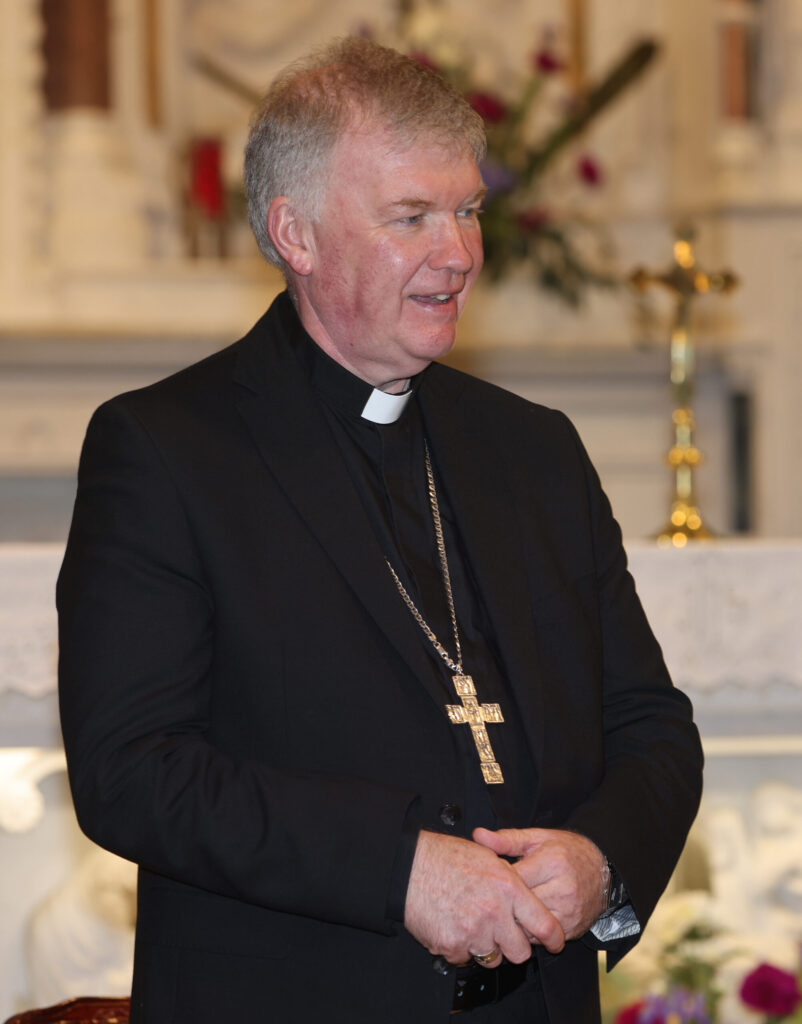
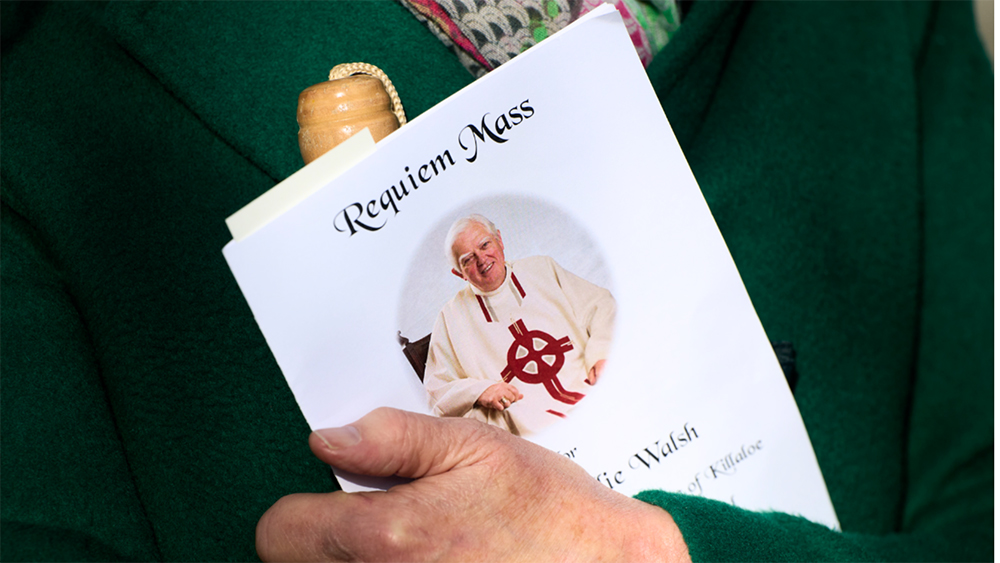
Then, I heard that the late Bishop Eamon Casey’s casket was removed from the Galway Cathedral crypt, to be buried privately in a family plot. It was deemed by the Galway Diocese to be the right thing to do. Here’s my question. Horrors of horrors could I dare suggest that Eamon’s soul may be resting now, eternally in peace with God in Heaven? Did he seek out God’s Love, Forgiveness and Mercy on earth through the Sacrament of Reconciliation, etc? Were his many demons cast out through God’s love, mercy, forgiveness and reconciliation? Were the many, many, many sins he committed beyond redemption? I suggest, not. Yes, my heart bleeds for the victims of demonic attack by people who have carried out evil acts.
Having just reached the grand old age of three score and ten, I have been graced to know that Love and Mercy is on offer to all of God’s children. It happens in a change of heart from being a great sinner, to being a great saint as is the case of Mary Magdalene and hopefully now, through God’s Love and Mercy, our brother, Eamon Casey.
No, in my humble opinion, his mortal remains should not have been removed from his first resting place.
Yours etc,
Lorraine Doran
Marino, Dublin
Everyone should read the papal letters
Dear Editor, in a recent edition of The Irish Catholic one of your regular writers who is an Irish priest wrote he rarely reads a papal document. I find that quite sad considering the Pope writes these letters to each member of the clergy and lay people. They may have names like Papal Encyclical or Exhortation but they are written for each one of us.
Each letter is written with such love and compassion. and is written in a way which teaches each of us, no matter our education, about some aspect of our Catholic faith. It is clear to see the work the Pope puts into each and every letter so that each one of us will come to know and love God more and have a greater awareness of what it means to be Catholic. I believe strongly that if everyone took the time and was encouraged to read these personal letters to each of us there would be no confusion about any Church teaching.
I urge every Priest to let his parishioners know when the Pope writes a letter to them. I urge every member of the Catholic Church to read them, even one paragraph at a time. You will not be disappointed. There is a treasure trove of letters you may not have even heard of. Don’t let anyone stand in the way of these letters addressed to you. They will fill your hearts and minds with every good thing. Find them all on vatican.va. You can look up every letter each Pope has written to you. They are personally addressed to you.
Yours etc,
Fiona Kiely
Bartlemy, Co. Cork
Zionism and Judaism are not the same thing
Dear Editor, I would like to make a few observations regarding The Irish Catholic article (July 24): ‘Irish Jewish leader warns against the new Occupied Territories Bill.’
In this article the word “illegal” has been replaced by the word “new.” Illegal Occupied Territories is an internationally and legally accepted term, which the ICJ applies to the present situation in Palestine.
Maurice Cohen speaks of anti-semitism, which arouses many and deep emotions. Zionism and Judaism are not one and the same thing. Zionism was founded in 1897 by an Austro-Hungarian Jewish journalist – Theodor Herzl – an atheist, who wrote to Cecil John Rhodes seeking his support and that of the British government, for the Zionist movement. This letter highlights the colonial aspect of Zionism – a political movement.
The Irish Jewish leader suggests that the Illegal Occupied Territory Bill, if passed, would do nothing to remove Hamas from Gaza, reform the ineffective Palestinian Authority or improve the lot of the Palestinian people.
Hamas and Hezbollah are the reasons for action and reaction by the IDF. No mention is ever made of the fact that at the inception of the Israeli State, there were two Israeli terrorist organisations – the Irgun and the Stern Gang who were responsible for a great deal of violence and numerous atrocities.
If Maurice Cohen, as a professed Irishman, together with his European colleagues, was to forcefully express his concern and the concern of the majority of the Irish people to his American and Israeli counterparts, he would experience a great deal more of the sympathy, which he feels to be so sorely lacking. He would have the advantage of being able to use a language not available to most of us – that of Hebrew.
Yours etc,
Judith Leonard
Raheny, Dublin
School holidays are not ‘too long’
Dear Editor, it was refreshing to hear the Minister for Education and Youth, Helen McEntee defend the length of the school holidays acknowledging that schools are “very active” throughout the year and summer holidays “gives everybody a chance to take a break”.
While Minister McEntee notes that the summer break poses challenges for parents, the real issue is not the school calendar, but the lack of affordable childcare and flexibility in many workplaces. Shortening the summer holidays would merely shift the burden without solving it.
Our culture increasingly values constant activity, consumption and productivity at the expense of rest, reflection and human connection. If there is a disconnect, it may be because we’ve built a society that prioritises work above all else, not because school holidays are too long. Rather than adapting education to fit a consumerist model, we might instead reflect on how to build a society that values rest, reflection, and relationships alongside work.
The summer holidays provide essential time for children and teenagers to recover from the intensity of academic demands, explore interests, spend time with family and develop unstructured creativity and social skills that are just as vital as classroom learning.
Ireland’s school holiday structure reflects a system that values learning, growth and development. There is little evidence to suggest that shortening the holidays would benefit students or society at large. If we truly want to support families and enhance quality of life, the solution lies in expanding access to childcare, improving workplace flexibility and rethinking the expectations we place on working parents, not in reducing the time children have to rest, play and grow.
Yours etc,
John McHugh, Principal
Griffith Avenue, Dublin