The rebirth of Sri Lanka passes through the respect of values such as honesty, truth and justice. Cardinal Albert Malcolm Ranjith, 78, Archbishop of Colombo, the capital of Sri Lanka, is firmly convinced of this. Cardinal Ranjith is a leading exponent of the Catholic Church in what, 700 years ago, the Venetian traveller Marco Polo – a well-known explorer of the Far East – described in his masterpiece Il Milione as “the most beautiful island in the world”.
Crisis
The nation clings to this beauty with all its might to emerge from the darkness of a serious political, social and economic crisis that has engulfed it in recent years. In 2022, amid a severe economic crisis, the country was swept by a wave of popular protests which led to the ousting of former President Gotabaya Rajapaksa. The protest movement, called aragalaya (struggle), demanded a radical change of the political establishment, compared to a past of corruption and impunity — dominated for over 65 years by the same parties and clans.
25% of the country’s 22 million inhabitants live below the poverty line”
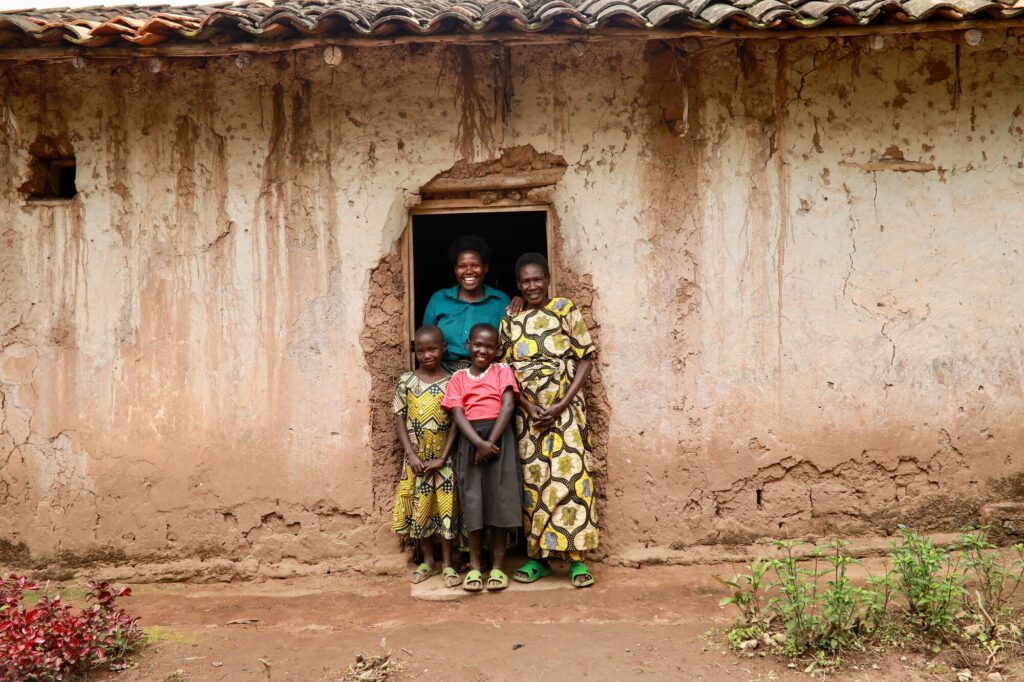
Sri Lanka, plunged into a social, economic and debt crisis, was forced to declared default – which devastated the population. The country faced serious food and fuel shortages while inflation soared to 70%. Only the International Monetary Fund’s loan-rescue – some $3 billion – allowed a turnaround, mitigating the effects of the crisis, yet 25% of the country’s 22 million inhabitants live below the poverty line.
Leaders
Amid widespread instability and disorientation, Cardinal Ranjith has emerged as a steady and trusted voice. As a wise pastor leading the Catholic Church — a small minority of 1.5 million faithful, just 7% of the population in the former Ceylon — he has become a vital point of reference.
His presence and moral stature have also made him a ‘political’ leader, not in the sense of belonging to a party, but as a person who promotes the common good. In fact – as he recalls in an interview with The Synodal Times – “politics is the highest form of charity” and the Church’s social doctrine “tells us to think of the public good of society, to respect dignity and fundamental human rights, to promote justice and truth in political action.”
And also because the Catholic Church has from the outset put all its resources and energies into motion”
The Cardinal has been for the Catholic faithful, but also for many non-Christians, a beacon in a delicate time of crisis. Both because he has always had the freedom of heart and the courage to show those in power the path to follow – the path of truth, transparency, and respect for the values and inalienable rights of the person and the people.
Approach
And also because the Catholic Church has from the outset put all its resources and energies into motion – through its social, educational, and charitable institutions – to alleviate the suffering of the population, without any distinction of ethnicity or religion.
This approach has been a kind of ‘synodality on the ground,’ an effort to truly ‘walk together’, practising compassion in the etymological sense: sharing the joys and sorrows of the common people – as expressed in the conciliar document Gaudium et spes. It is this approach which makes the Church a valued and respected institution in Sri Lanka, as in other parts of Asia.
In the country, which is emerging from the serious social and economic crisis, there is a new hope”
Today, Cardinal Ranjith sees the light at the end of the tunnel: “We are on the road to rebirth, thank God. Sri Lanka is going through a phase of profound political and democratic renewal. As of November 2024, we have a new president and a new parliament that have an absolute majority and are changing the old power structure – one that was tied to a political class that was corrupt and guilty of abuse of power and human rights violations. In the country, which is emerging from the serious social and economic crisis, there is a new hope.”
The Cardinal adds: “Hope – that is precisely the right word to describe the spirit that reigns in the country today. And we Catholics are celebrating the Jubilee of Hope, so our presence, our mind, our words, our orientation is fully in tune with what is happening politically, socially, culturally and spiritually in the nation.”
Justice
In the pivotal in November 2024, the people elected Anura Kumara Dissanayake as their new president. “A change was expected and it has taken place, “Cardinal Ranjith notes. “A government is now in office that is socialist-oriented and appears to be honest and dedicated to the good of the people, aware of its responsibilities. It presents itself as a government that intends to fight poverty and create welfare for the disadvantaged social classes.”
“The new government,” he continues, “has launched a new season and has set to work to bring justice to those who have suffered injustice in the past – to those imprisoned or who have suffered violations of fundamental rights. And it is doing so by following a path of legality, fully respecting the prerogatives of the law.”
We are in a phase of recovery — even tourism is experiencing a strong revival”
“One area where President Dissanayake’s administration is focusing its resources and attention,” the Cardinal notes, “is the national economy. It is slowly recovering after the crisis, following guidance from the International Monetary Fund, which has provided loans. We are in a phase of recovery — even tourism is experiencing a strong revival, and this bodes well. It is an important sector that contributes significantly to our nation’s prosperity.”
“Of course,” Cardinal Ranjith continues, “the recovery process will take at least a couple of years, but we are on the right track. There is a certain optimism in the population today. We see a responsible political class and a president in whom people have placed their trust. The majority of the Catholic population has also supported him and the Church has good relations with the government. There are good prospects for working together.”
Service
In the relationship between the Catholic Church and political institutions, there is an open wound, explains the Cardinal: “There is the question of justice, i.e. tracking down and prosecuting the perpetrators, executors and principals, responsible for the Easter terrorist attacks, which occurred in churches and hotels, in 2019. President Dissanayake announced a new investigation for transparency and to seek the truth.”
“We are confident,” the Cardinal adds. “There is a government commission that periodically interviews some of our priests. From the beginning we have demanded truth and justice against the cover-up of the case. Now, we are awaiting legal proceedings and the emergence of the real responsibilities — including any complicity within the public apparatus. The victims are still waiting for justice.”
We continue our social, educational, and charitable activities in the service of the people”
Meanwhile, the Holy See has decided to include the 167 Catholics killed in church in Sri Lanka on Easter Sunday, April 21, 2019 in the Catalogue of 21st Century ‘Witnesses of the Faith’ drawn up by the Dicastery for the Causes of Saints and presented during the Jubilee Year.
In this frame, Cardinal Ranjith says: “The life of the Church goes on. We walk together as the People of God; we continue our social, educational, and charitable activities in the service of the people. Our communities are experiencing Jubilee: each diocese has prepared a calendar of spiritual celebrations and activities. It is for us a time of inner renewal, to start again with new momentum that comes from the Lord. The theme of hope precisely matches the common feeling in people’s hearts. In this phase of national life, we are bearers of hope; we nourish the hope that comes from God. Let us listen and make our strength available so that the Lord can complete his work, and so that we can humbly and faithfully do our part.”
The Cardinal also reflected on Pope Leo XIV, whom he helped elect during the recent Conclave. “He is a person who, thanks to his missionary experience, is attentive to the realities of the peripheral and distant Churches,” Cardinal Ranjith said. “I believe we will have in him a solid point of reference. By choosing the name Leo, he reminded us of Pope Leo XIII and his vision of a Church that responds to the challenges of modern times with Christian answers. We trust in his humble and wise guidance.”