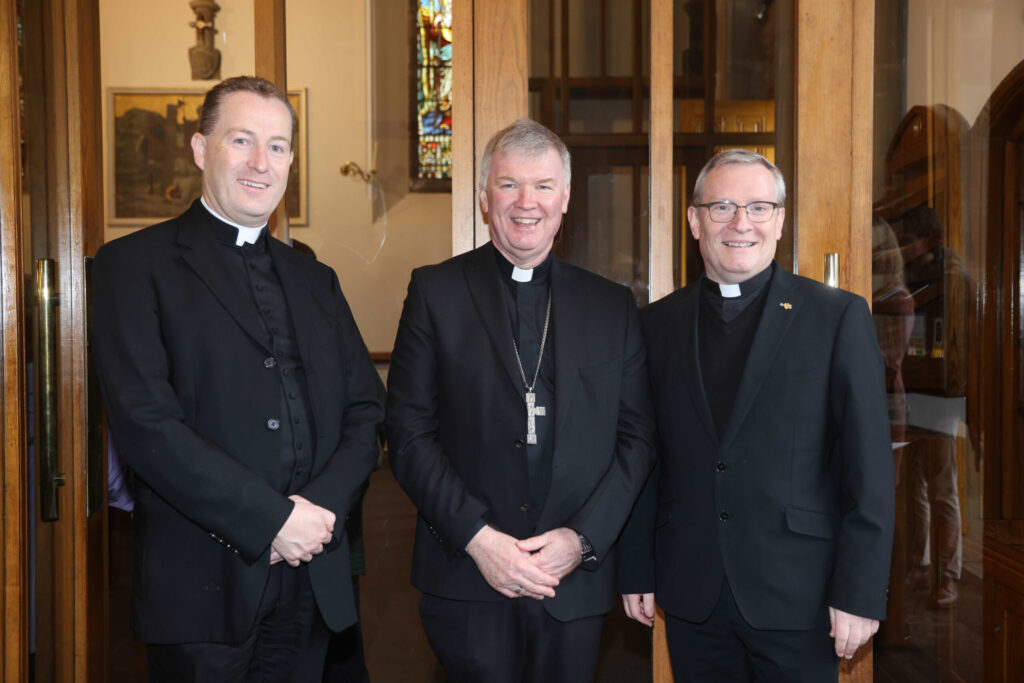
A native of Castlebar, Co. Mayo, Fr Mark Quinn was ordained to the priesthood for the Archdiocese of Tuam by Archbishop Francis Duffy, in the Church of the Holy Rosary, Castlebar on Sunday, July 7 of last year.
Before nourishing souls, Fr Mark Quinn nourished hungry diners as he plied his trade cheffing for many years before answering a call to Priesthood. His journey saw him complete both his philosophy and theology qualifications in St Patrick’s College, Maynooth before completing two units of Chaplaincy studies in University Hospital Kerry.
In late 2023 he was assigned to the picturesque town of Westport where he was ordained and served as a Deacon in early 2024. After ordination he was assigned to the Cathedral town of Tuam as acurate. One year on: Here we find out how life has been in his first 12 months as a priest.
Can you tell us a little bit about your vocation story?
“I am often asked this, and my answer is nearly always the same: ‘Do you want the long version or the short version?!’
“People often call it ‘a testimony’ but for me everyone has a testimony of some sort. It’s a pretty long story but I’ll give you the basics. I always had a deep faith but probably a pretty bad formation in terms of understanding what the Church taught and why it taught it. So, I guess like many young people, I made up my own path and my own template for how to live life.
“I had a lot of personal difficulties in teenage years and into my 20s, but prayer always was at the centre of it, especially a deep devotion to Our Lady. At the height of these struggles, I made a trip to Medjugorje with my mother, which was to be the turning point I guess.
They were very good to me but by the end of the novitiate I didn’t feel I was in the place I was called to be”
“I started to really look at the faith again and was blown away by all the riches I had been missing. I once heard Fr Mike Schmitz saying ‘I experienced the Joy of being wrong’. I can really relate to that because my way and my plans always got me in bother, but Christ’s way and his plan for me kept me on the straight and narrow.
“The deeper I got into the faith and began to understand it, the more I fell in love with the Church. It was around this time that I started to feel a call to priesthood. I fought it tooth and nail because I really had my own plans in life but when God knocks, he won’t stop. I took another trip to Medjugorje on my own to discern and to ask Our Lady was this what her son wanted, and the answer I got back was in the affirmative. I was petrified but I had to at least give it a go.
“I did a bit of overseas voluntary work, I initially felt a real pull to working with the poor, so I joined a religious order, the Missionaries of the Sacred Heart. I was with them for almost two years. They were very good to me but by the end of the novitiate I didn’t feel I was in the place I was called to be.
“I had already been accepted by the diocese previous to that, so I went back and asked them if they would still have me. They were happy to take me and that really began the journey of formation for diocesan priesthood for me. As I said, that’s the short version.”
What do you like about being a priest?
“It’s just very humbling to think about being called. I still often have to stop and think ‘who are you kidding?’ A lot of things still haven’t sunk in yet. To know that you are a vessel for the Sacramental Grace and to act in Persona Christi is still something that I have stop and wonder about.
“It’s also a very humbling but joyful experience when you can help someone who actually needs your help. I think that’s when I feel most fulfilled. I guess, I like being a priest when I’m doing the things a priest is called to do and when I am serving those who need me most.”
What are the challenges of being a priest in modern Ireland?
“There’s too many to mention! At my ordination, Archbishop Francis made the point in his homily that it was a great time to be a priest and he’s correct. Many people are seeking something more that the world hasn’t given them. I see this particularly in a trend of young men returning to the faith…
“Most people don’t want anything to do with the Church, yet they want the sacraments of initiation and nearly always the funeral Mass. You can feel like a service provider and often that’s simply how people see you.
“I think as a Church, we are guilty of enabling this dynamic. I think there’s the fear we might lose contact with the people if we make hard decisions regarding the sacraments, but we have to cut our losses and trust in God.”
What experience have you had with young people in ministry?
“I try to put a lot of focus on young people and youth. Myself and a few others in the archdiocese, have put on an annual conference for young adults which is always well attended. I try to spend a lot of time in the schools too doing proper catechesis.
“Myself and my colleague Eimear Burke began a youth club here in Tuam this year, [and] we are hoping it will continue to grow. I have had NET Ministries down here too with us and they were a brilliant addition. I’m not getting any younger, so I have realised that young people need to work with young people. So that will be our focus for next September, please God.”
How do you find the state of faith of young people and how do they differ from older people?
“It’s a mixed bag really. In the schools, the vast majority of them have little or no connection to Church because their families aren’t practicing, and of course that’s no fault of their own. Many become indifferent to the faith as they get into teenage years, but many are willing to have at least the philosophical discussions if you can make it interesting for them.
“For those young people who are practicing though, I have been amazed at their commitment and understanding of the faith. You see this in the confessional in particular. Young Catholics have such a good understanding of morals and a great self-awareness. They want to grow in holiness and that’s such a positive start.
“I think the vast array of resources now, online and on social media, is forming young Catholics to be incredible disciples. I’ve even seen cases where young Catholics are re-evangelising their own parents.”
What are you most likely to cook if the archbishop drops by for dinner?
“He does drop by for Sunday lunch now and again, but I don’t have the time to cook for anyone anymore, unfortunately. I did have the opportunity to cater for a couple of events while as a deacon in Westport. That was good, to be able to offer my skills in a church context. He is a foodie like myself and likes to cook too, so we often chat about food and restaurants when he’s over.”
How has your experience as a chef been of benefit to you as a priest?
“That’s a good question. I’m certain that any man who joins formation having spent time in any career will bring all sorts of unique skills to the vocation. I’m really convinced of that. You can bring the basics like timekeeping, social skills, pressure management, and just being able to relate to other human beings on a basic level. A workplace provides all sorts of challenges and opportunities that we encounter in priestly life…
“I actually think that seminary formation should include summer work for lads, so that they can be out among the people who don’t normally have any contact with the Church. It’s all good and well to be on a pastoral placement in a parish or on a pilgrimage with practicing parishioners, but we need to connect with those who fall into the crevices. We need to get out of our bubble and go out to the peripheries.”
You mentioned your volunteered work abroad. Can you tell us a bit more about that?
“I had a stint in Tanzania with a charity from Cork which I really enjoyed. I was discerning the vocation at the time, so this trip gave me the sense that I might be being called to missionary work.
“I went to a few discernment weekends with a few missionary orders and took a particular interest in the MSCs. While I was journeying with them, I found out that they were running a volunteering trip to South Africa, so I applied to go on that and was accepted.
When you see what other people are experiencing, your own problems tend to shrivel away”
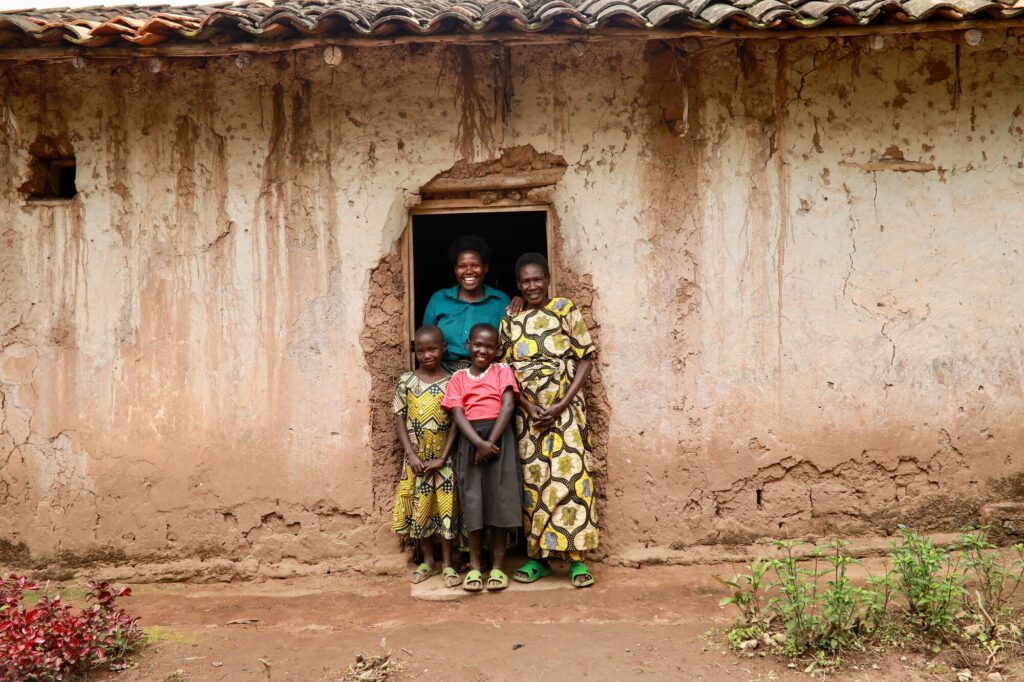
“Myself and two other volunteers travelled with Fr Alan Neville to an orphanage run by the MSC sisters. It was a brilliant experience. We were working with children who had HIV/AIDS through family circumstances. It was a real formative and eye-opening experience. Volunteering is the best antidote for your own problems I feel.
“When you see what other people are experiencing, your own problems tend to shrivel away. People often say to me ‘Oh, I’d really love to do that’ and my reply is always ‘Well what’s stopping you?’”

the Mono Restaurant Westport (since closed)
in 2014 with his friend Luckas Nowinski.
One year after ordination, what advice would you give to someone discerning a vocation to priesthood or religious life?
“One of the grave mistakes that people make when discerning a vocation is to think that once they enter formation that’s them signed up for life. I find this particularly more in young men than women.
“I think that’s a problem in society in general. Young men are petrified of commitment of any sort. I would say that you cannot properly discern unless you’re living the life for an extended period of time.
“Two other very practical pieces of advice would be 1) get yourself a good spiritual director. They are hard to come by these days, but if the lord wants to guide you he will provide. And 2) Adoration. If you’re not talking to the boss how do you know you’re needed for the Job! It’s that simple. Turn off the phone, the laptop or whatever and just sit in front of him and talk a little but listen a lot!”
Finally, when you do find time to unwind, what do you like to do?
“I’m Football mad! I’ve tried to play all my life, where I can fit it in and I coached several teams over the years. My brother always slags me that I’ve played for more clubs than Darren Bent! Unfortunately, I don’t have time to do that anymore and I miss it a lot because it was a great way to connect with people, especially the youth.
“I’m a season ticket holder at Galway United and it’s rare that I miss a game so that’s a great way to unwind I find. I’ve been following them for over 30 years now, so I hope to be still heading in there in another 30 years’ time! And who knows, if I offer a few Masses for them, we might actually win something!”
I think that’s when I feel most fulfilled. I guess, I like being a priest when I’m doing the things a priest is called to do and when I am serving those who need me most”
Young Catholics have such a good understanding of morals and a great self-awareness. They want to grow in holiness and that’s such a positive start”
I think that’s a problem in society in general. Young men are petrified of commitment of any sort. I would say that you cannot properly discern unless you’re living the life for an extended period of time”