Christ Alive: Reflections from the Shadows of Life into the Light of God,
John Deane-O’Keefe (Resource Publications, Eugene, Oregon USA, £19.50; available through Amazon)
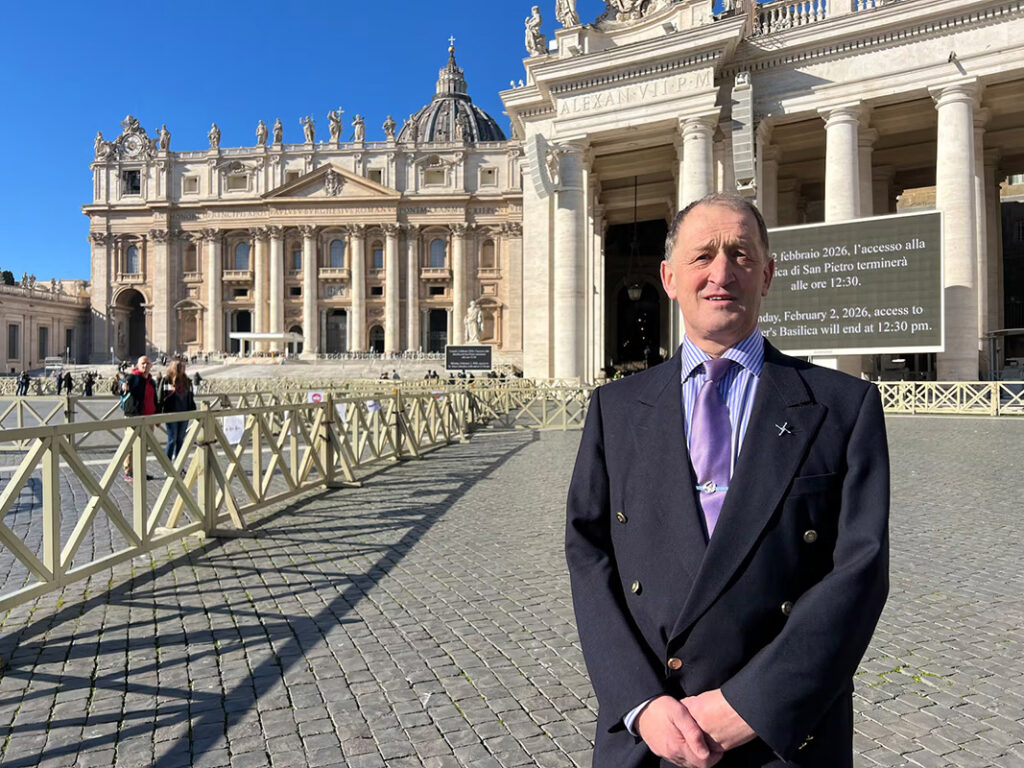
This is an unusual book. The note on the author tells us that John Deane -O’’Keefe is a church pastor, prison and hospital chaplain, and forensic criminologist. This suggests a rare combination of aptitudes and skills, especially as he divides his time between Ireland, Northern Ireland and England, preaching in Christ Church Cathedral here in Dublin, and acting as local magistrate (equivalent to our district justice) in Newcastle -Upon -Tyne.
His book consists of sermons and articles for various journals, including the Church of Ireland Gazette and The Church Review, publications which may be unfamiliar to many readers of this paper.
Before I began the book I wondered how all of this would combine in the 160 odd closely printed pages of his book.
Approachable
John Deane-O’Keefe writes in a very immediate and personal style which is very approachable; but his material, drawn from all his avocations, can in places seem chilling.
In one of his essays he discusses the question of President Putin’s personal psychology in the light of criminology. The question he poses his readers is a difficult one: Can Christians forgive Putin for his crimes, for that is how he sees many of the Russian leaders actions?
But Putin is not the only psychopath in these pages, readers ought to be aware of in advance of essays on the James Bulger murder and the crimes of Jimmy Saville in England.
But Ireland does not come off lightly either, In “How Low Can I Go?” about his experiences when he was sent by his editor to cover the Ardoyne dispute and witness the scene when small girls on their way to school where abused and often showered with filth.
Here too there was an aspect of light though, when Billy Hutchinson of the Progressive Unionist Party admitted at the time that “the terror on those children’s faces was unbelievable” and he was “disgusted to be a loyalist” having seen what he did. (p.116). But that was only a moment from years of terror as we know too well.
He deals, indeed, with a topic I cannot recall many other authors of this kind of popular book dealing with, the matter of cosmic physics and the potential age of the cosmos”
These are unpleasant things to have to cope with even at second hand. But then Christianity has always posed this problem: How can we forgive the unforgivable?
I say this as a warning in advance, for the book is in fact filled with insights on more everyday problems and situations. In fact he tackles topics many spiritual and religious writers do not deal with. (These include an essay on that matter of the fading of religion and the rising of professed “spirituality”, which is insightful.)
He deals, indeed, with a topic I cannot recall many other authors of this kind of popular book dealing with, the matter of cosmic physics and the potential age of the cosmos. He rather suggests that in reflecting on the matter we go outside and address ourselves to the beauty and nature of the world around us.
Unusual
He certainly brings to bear often unusual points of view. On the matter of judging others, for instance, he describes that habit of judges (of which he is one) retiring to consider the evidence, for it is evidence in both life and faith that is critical.
‘Yet we can’t get away from it. Evidence remains very important to the human condition – and when it comes to our faith, Well frankly, we just can’t get enough of it.’ ‘We just love proof in our everyday lives, yet our cynicism is all the more curious when you think about it really’.
In his preface he notes, “This book of reflections for every week of the year is from the streets, from prisons, from the campus, from the church, from the people, but most of all from the heart”.
This is very true. But perhaps it should not be gulped down. One a week for a year, given appropriate thought, might be the right prescription.