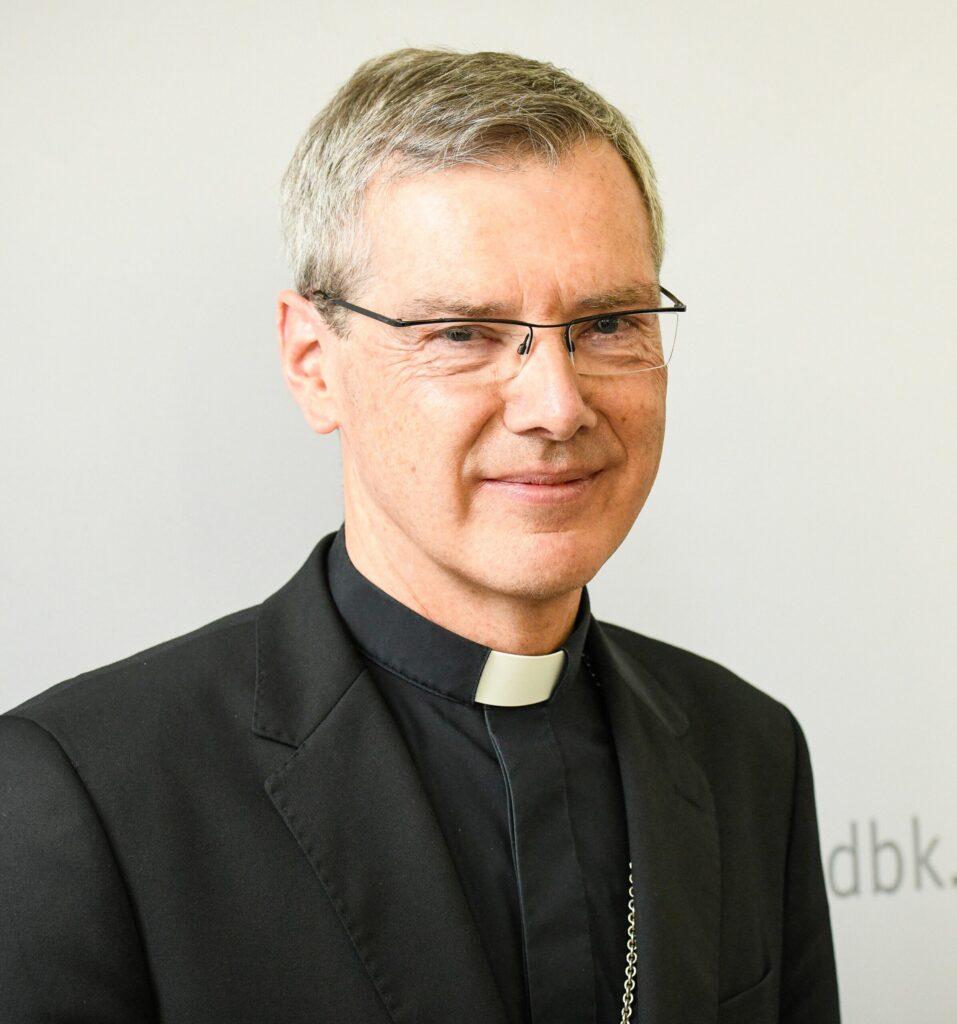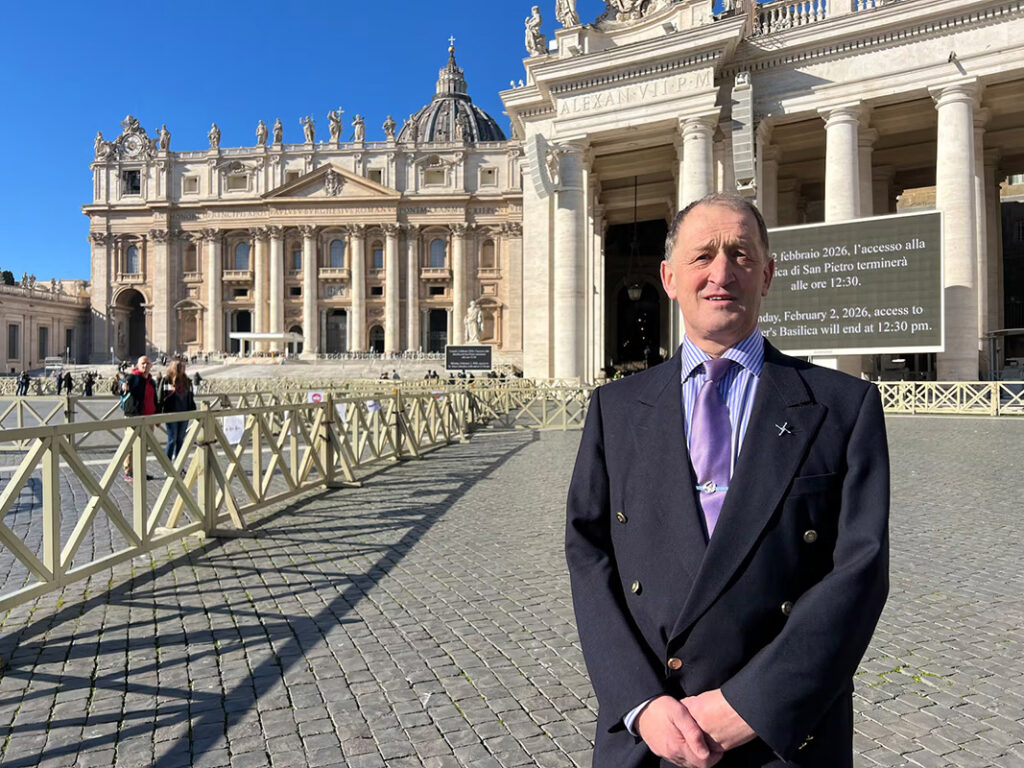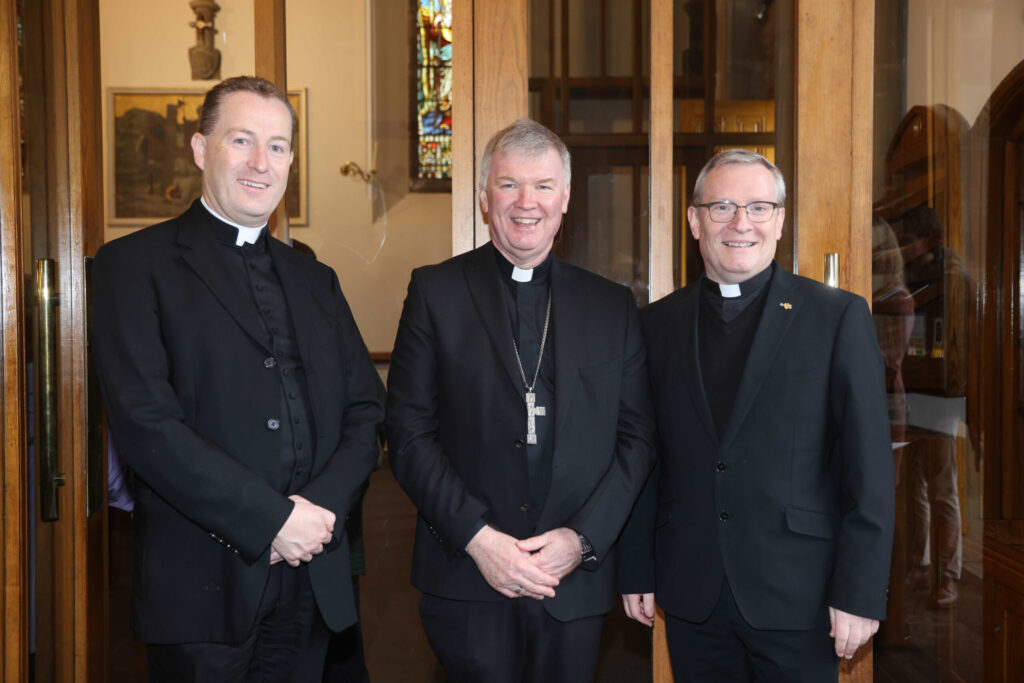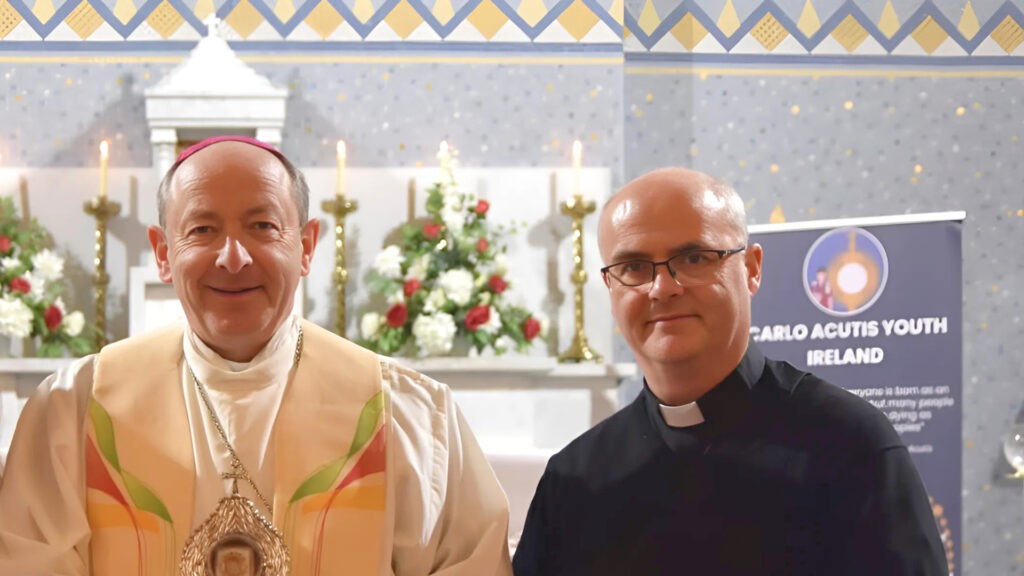
Fr Micheal Toomey was born of Irish parents and lived in London until 1994. His ordination in 2009 was the first in eight years for the Diocese of Waterford and Lismore. His mother had returned to live in her native Clonmel and Fr Toomey was appointed there, to what was his home parish, in 2015. He became a familiar face on TV and online Masses during Covid lockdown, and is still a regular celebrant on RTÉ News channel Mass on Mondays. He is currently administrator to seven churches, four parishes with two other priests on the borders of counties Tipperary and Waterford near Clonmel.
The Irish Catholic went to meet him in his Ardfinnan and sister parishes to get his views on Relentless Ministry.
It is a busy group of parishes, where everything from accounts to safeguarding reports are multiplied by four (parishes), but the pastoral duties are not a problem for Fr Toomey.
“When people say it is relentless with Mass and funerals and all that, I don’t mind because that is what I was ordained to do. There are times when it is extremely busy, like this last week when we had two confirmations on Friday, four funerals, the RTÉ Mass with Clonmel High School. Then all this week we have the first penances and each of them has a practice and then they are held in the evenings and that is four times. I go to houses, hospitals, sick calls. That is relentless but I don’t mind any of that, it is not a problem,” he said.
Each priest and parish have to re-invent the administration wheel. Fr Toomey has known priests who retire because they feel they are not up to this; others just struggle on as best they can”
He is happy doing that 24/7. He appreciates the huge work the pastoral councils and finance, safeguarding and maintenance volunteers and a paid secretary do on the practical tasks in his parishes, and feels that administration tasks should not take from a priest’s pastoral work.
Looking at the bigger picture he would like to see a more official structured backup. As more and more employees and volunteers take on the administration tasks, there are few structures for insurance, or recruitment policies, contracts of employment in place at a diocesan or national level. Each priest and parish have to re-invent the administration wheel. Fr Toomey has known priests who retire because they feel they are not up to this; others just struggle on as best they can.
Courts
“I’ve spoken to a number of priests who are being brought through the courts for issues that could have been resolved if we had the proper structures in place to support priests in the administration, not just of accounts, finance and reporting, but dealing with the management of people, both paid employees and volunteers. That is my main worry and concern going forward – there is nothing to back us up.”
Sometimes I think; ‘why was I ordained? For this?’ because I wasn’t”
The potential closure of churches due to declining parishioners and collections is also a worry for priests as is the maintenance and upkeep of graveyards. Fr Toomey agrees that under Canon Law the parish priest is responsible for all these things and upkeep of parish buildings, accounts, and so on but that rule was made when a PP could delegate to curates. Now there are far fewer priests.
He is at his desk at 7am every morning and does two hours of admin tasks to keep in top of it all. He feels fortunate in that he has a secretary and volunteers to help, and his background in business gives him admin skills.
“Sometimes I think; ‘why was I ordained? For this?’ because I wasn’t,” he said. “I do fear for parishes where priests are struggling and panicking. On top of trying to look after everyone they have to do the books as well. And that really needs to be looked at.”
Listening
He is not sure that it is. “A lot of priests are saying this but no one is actually listening. Across Ireland none of the bishops are really listening to what the priests are actually going through in the parishes at the moment. Bishops are probably suffering in the same way. We have come close to breaking point.”
He now worries about mental health of priests. He has known priests who have taken their own lives”
These stresses can lead to mental health issues – something Fr Toomey has campaigned on. He met the Junior Minister for Health in 2019 and spoke out about the prevalence of death by suicide (eight in six months in his area) and a lack of mental health care and beds in Tipperary. He now worries about mental health of priests. He has known priests who have taken their own lives.
“It is very difficult to meet other priests even for lunch. We try our best but you just do not know what the day will bring. In really rural parishes a lot of priests do not see another priest from one end of the year to the next and it really is an isolation for them. The mental health impact on priests really needs to be addressed. You could say it is up to the priest to get his support but that is very difficult when he has relentless ministry, when he is relentlessly trying to keep the doors of the churches open,” he said.
Priests, like many other professionals, can have a reluctance or fear of speaking about their health.
Weakness
“If a priest says I need to take some time off is it a sign of weakness? A sign I am not able to cope? Is it a sign of giving in or letting people down – that is my biggest fear – letting people down. But I have to balance my life to say no to certain things so not to get overwhelmed and to overwork,” he said. For example Fr Toomey did not join any of the Boards of Management of national schools in his parishes. He was not pressured to do this but it was initially assumed that he would.
I knew what to do after the tragedy and the funerals. I knew to go away for a few days to completely switch off”
Another challenge is where priests are called out to road accidents and take care of the last rites, comfort the relatives and the entire community, and speak to the media.
Fr Toomey was available for all that when a serious road traffic accident occurred in the Clonmel area with four young people killed.
“I knew what to do after the tragedy and the funerals. I knew to go away for a few days to completely switch off,” he said. “A lot of priests would say ‘I just want to get back to normal’, but that is when burnout kicks in. Burnout for priests is a massive thing at the moment without them even realising it,” he said.
His biggest regret about relentless ministry is he has less and less time to get to spend with parishioners. “Sadly for me, I miss out a lot as a priest is the local connection, person to person. When I have a couple with a child for baptism I only meet them at the baptism because I physically do not have time to meet them,” he said.