The resurrection of Peter
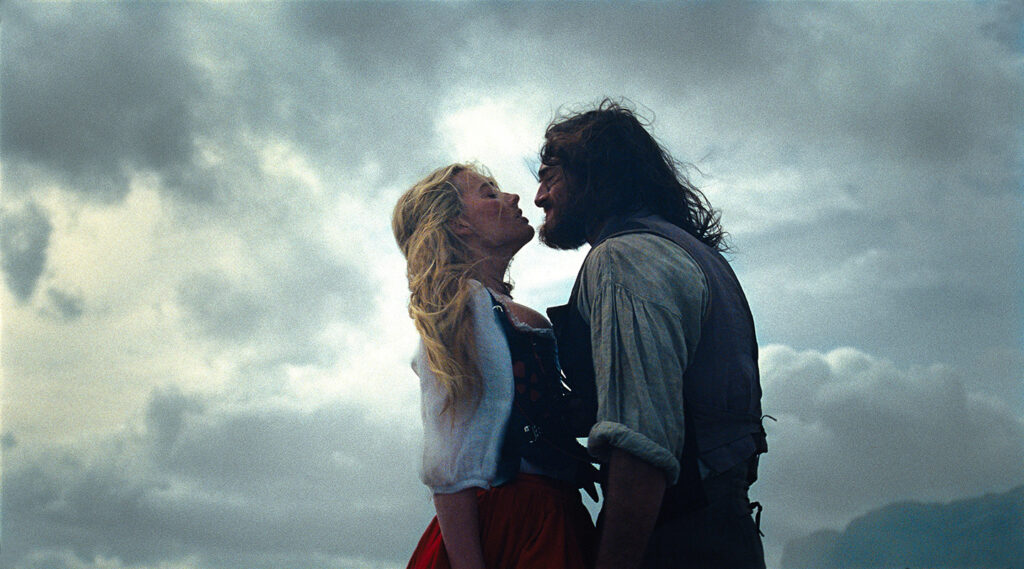
At the end of The Georgics, Virgil retells the myth of Orpheus and Eurydice—a story of love, loss, and irreversible failure. After Eurydice dies from a snakebite on her wedding day, Orpheus charms the rulers of the underworld with music to win her back. They agree—on one condition: he must not look back as they ascend. But as they near the surface, Orpheus, in a moment of recklessness, glances behind him. Eurydice, almost restored, vanishes like smoke. The agony of love is sealed by a single fatal mistake.
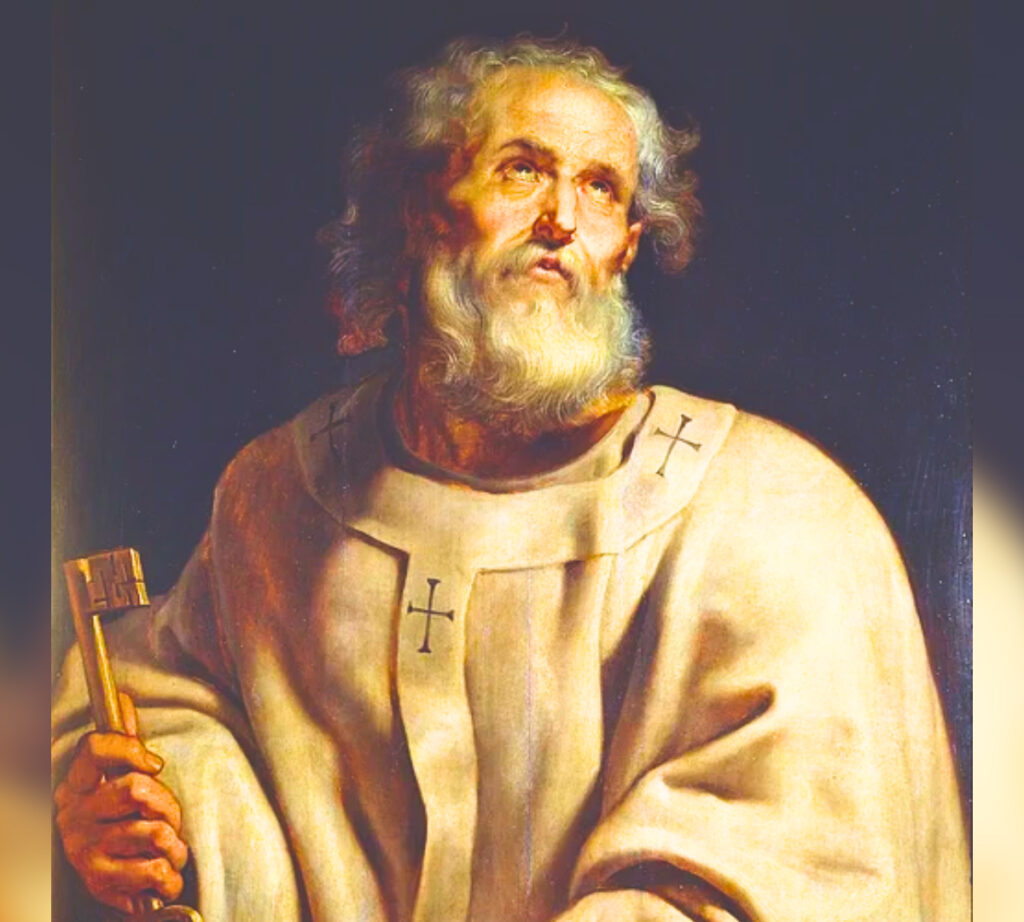
Like Orpheus, Peter too makes a promise he cannot keep. Yet unlike a Greek tragedy, his story does not end in final loss, but in restoration. Peter’s journey is not one of perfection, but of transformation—where shame becomes strength, and failure gives way to friendship renewed. His ‘resurrection’ is not only an event at Easter morning, but a personal encounter with mercy that unfolds slowly, painfully and beautifully.
Discipleship, too, is not immune to moments of impulsive decisions, of glancing backward, of walking with more zeal than wisdom. The path of the disciple is not a straight line but a pilgrimage that ebbs and flows. Sometimes we stride ahead with courage; other times we stumble in fear, hesitate in doubt, or return to old habits when the way ahead feels unclear
Flaw
Peter’s impulsive loyalty reveals a familiar flaw—his pride, his hubris, his Achilles’ heel. At the Last Supper, he boldly declares, “I will lay down my life for you” (John 13:37). His words are heartfelt but overconfident. Jesus warns him: “Before the cock crows, you will deny me three times” (John 13:38). Later, in the courtyard of the High Priest, warming himself by a charcoal fire, Peter does exactly that. He denies knowing Jesus, not once but three times (John 18:12–27). Then the cock crows. The night of friendship ends not with loyalty, but with betrayal.
In that moment, Peter stands with Orpheus—both made promises they could not keep, both experienced tragic failures. Eurydice slips back into shadow; Jesus is led away to be crucified. Peter’s final words about his friend are not of love, but denial. For the rest of the Passion, Peter is silent, absent. Overcome with shame, he, like Orpheus, is left alone on the shore of sorrow. There is the ‘night of denial’ for every disciple—the moment we realise we are not as strong as we thought, when our promises collapse under pressure.
His slowness speaks not only of guilt, but of a heart still longing for restoration. Discipleship is not linear”
But the Gospel is not a Greek tragedy.
On Easter morning, Mary Magdalene rushes to tell Peter and the other disciple that the tomb is empty (John 20:1–9). The two disciples run to the tomb, but Peter’s footsteps are heavy with guilt. The beloved disciple outruns him and, seeing the evidence, believes at once. Peter, though the first to enter, hesitates to believe. His slowness speaks not only of guilt, but of a heart still longing for restoration. Discipleship is not linear. It is a pilgrimage through shadow and light, where faith often emerges slowly—through wounded love and faltering hope. As Pope Francis said on 26 March 2016, “This marked the beginning of Peter’s resurrection, the resurrection of his heart”.
Fishing
Even after the Risen Lord appears, Peter returns to fishing (John 21:2–14), perhaps out of confusion or discouragement. Others follow him—even those not fishermen by trade. It is a deeply human response—returning to the familiar when the future feels uncertain. That night they catch nothing. At dawn, a figure on the shore tells them to cast the net to starboard. They obey—and catch 153 fish, symbolising all the known species of fish at the time. This becomes a sign of the Church—a net cast wide to gather all.
Discipleship becomes possible not by our own effort, but through the power of the Risen Lord, encountered in simple acts and sacred signs”
When Peter hears, “It is the Lord” (John 21:7), he ties his outer garment around him and jumps into the sea. Who dresses before swimming? Like Adam and Eve covering themselves after the Fall, the gesture reveals a mix of shame and longing. On the shore, Jesus has prepared a charcoal fire—the only other one in John’s Gospel was in the courtyard of Peter’s denial. But this fire is not for betrayal, but for breakfast. The setting shifts from cold denial to warm reunion. “Come and have breakfast,” Jesus says—an invitation to mercy and healing.
The net, once too heavy for the group, is now drawn ashore by Peter alone—a sign not of solitary strength, but of grace rediscovered (John 21:11). Discipleship becomes possible not by our own effort, but through the power of the Risen Lord, encountered in simple acts and sacred signs.
Conversation
Then comes a conversation that is both tender and invasive. Jesus engages Peter in a threefold question (John 21:15–17): “Do you love me…?” The use of the Greek terms agape (unconditional love) and philia (friendship) carries significant nuance. Jesus first asks, “Do you love me (agape)?” Peter replies, “Yes, Lord, you know I love you (philia).” A second time—same question, same answer. On the third occasion, Jesus meets Peter not with idealism but with honesty: “Do you love me (philia)?” Peter is hurt, but affirms, “Lord, you know everything; you know I love you (philia)”. Three denials are met with three invitations: “Feed my lambs.” “Look after my sheep.” “Feed my sheep.”
Jesus stoops from agape to philia, accepting Peter’s fragile gift of friendship in his weakness, yet gently encouraging him through the dialogue to rise again toward the fullness of agape, a love that is sacrificial and whole. Here is the practical heart of discipleship: not spiritual perfection, but persevering love—love that remains through denial, confusion, and regret.
Jesus then says to Peter, “…you will stretch out your hands and somebody else will…take you where you would rather not go” (John 21:18). This hints at Peter’s martyrdom—his hands stretched out in crucifixion. The bold promise he once made— “I will lay down my life for you”—will at last be fulfilled.
Then, there is a final, tender invitation: “Follow me” (John 21:19). After all that has happened—denial, shame, silence, return, reunion—still the call remains. Follow me.
This is the rhythm of discipleship: bold confessions of faith followed by failure; the night of the cross followed by the dawn of resurrection; the return to old routines giving way to new beginnings. We discover we have no strength on our own, but through Christ, who meets us again and again—not with condemnation, but with intimacy and mercy.
In Easter 1916, W.B. Yeats wrote: “All changed, changed utterly: A terrible beauty is born.” Peter’s life embodies this. The beauty of resurrection is terrible because it comes through death—death to pride, to self-reliance, to illusions of strength. Yet in that dying, something new is born. Not perfection, but love. Not failure, but friendship renewed.
Jesus is our true Orpheus—not one who loses the beloved in a moment of human frailty, but one who enters the shadowed realm of death and leads us out. He does not falter on the threshold. He does not look back. He walks forward, into the light—and takes us with him.