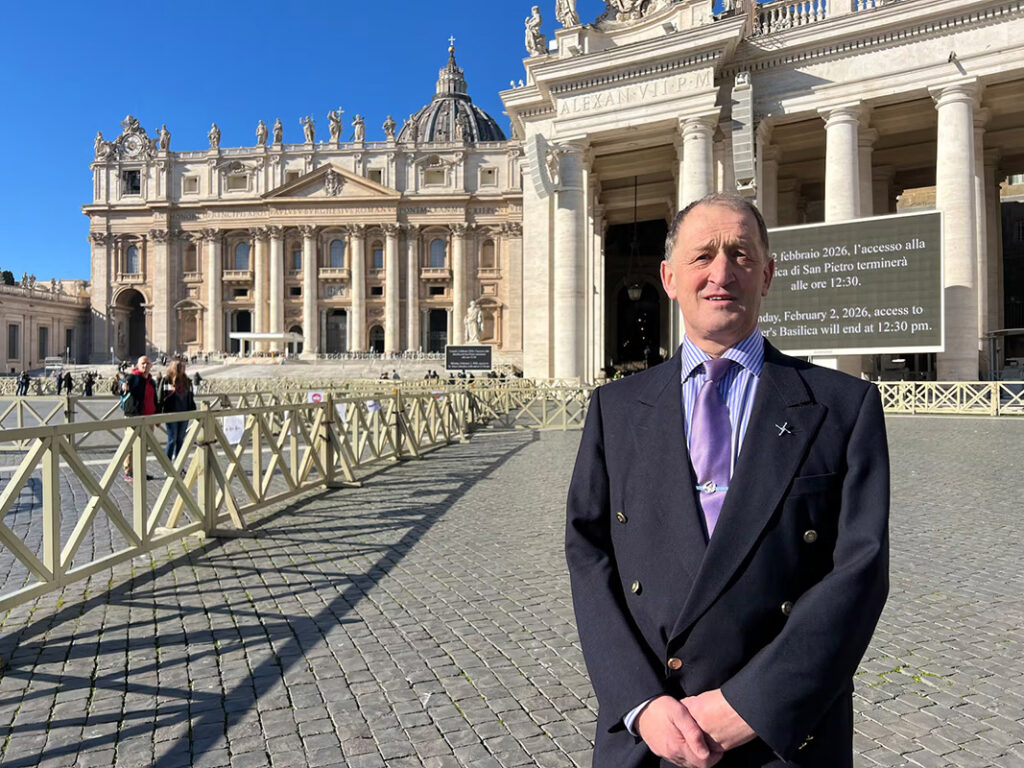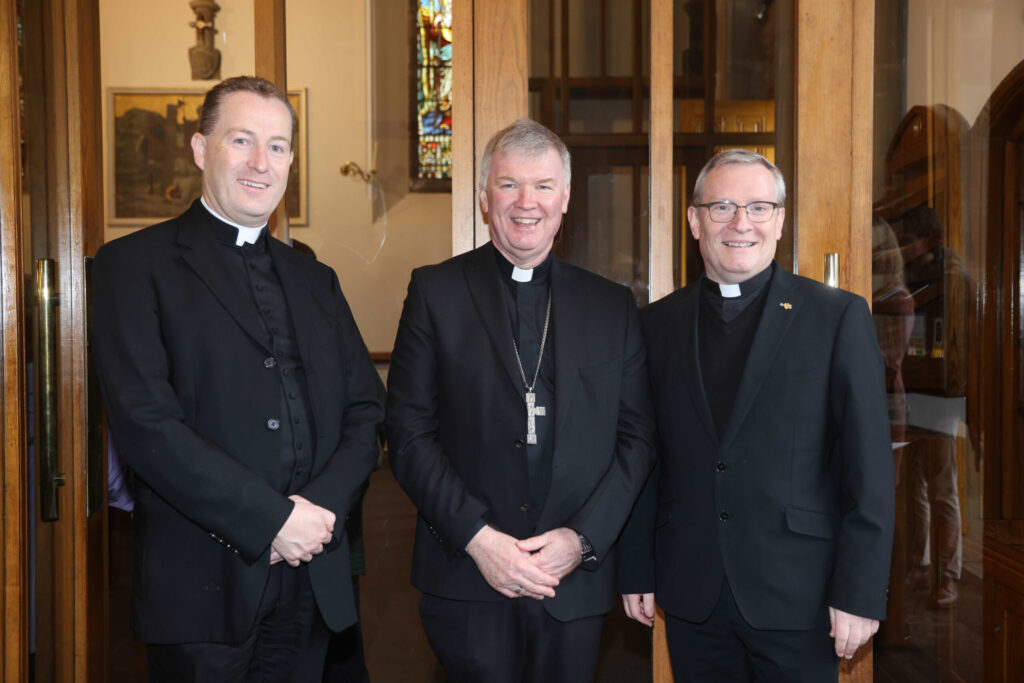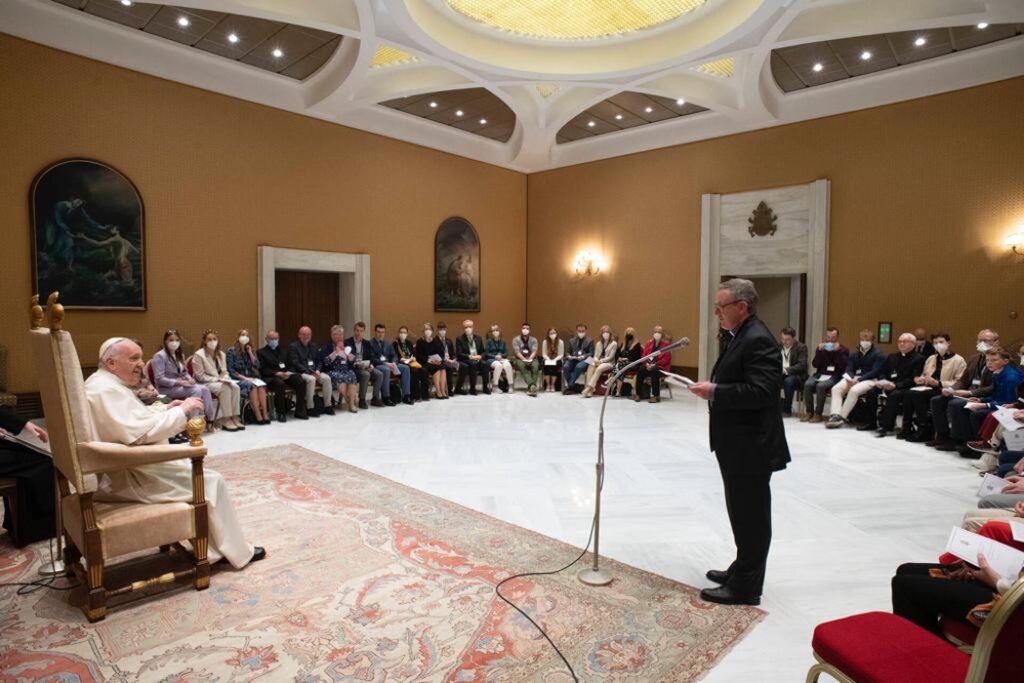
Three years ago this week, on the April 20, 2022, a group of 38 teachers, lecturers and students from various schools and colleges in Ireland left the Villa Palazzola in the Roman hills in the early hours of the morning to beat the rush-hour traffic. We had been invited to a private audience with Pope Francis but no idea how “private” it would be or how long it might last. Up to the last moment we feared it might be cancelled as the situation in Ukraine continued to worsen. At best we hoped to get to meet and greet the Pope before he moved on to other groups. Instead, we were ushered into a room at the back of the Hall of Paul VI, where, upon arrival, Pope Francis surprised even his own staff by beginning the visit with a handshake for each of us. There was something very humble about this, given that he was clearly in discomfort walking and that Covid-19 was still a concern. People commented afterwards that from that moment they felt they were in the presence of someone special.
Our visit was part of the GRACE (Global Researchers Advancing Catholic Education) project. I had prepared a few words of introduction in Spanish but given that an interpreter was present, and that I didn’t in any case feel all that confident, I spoke in English, only to be quickly interrupted by the Pope who said, “Slow down, Father, we have time!” As it turned out, we had his undivided attention for three quarters of an hour.
Departing from his prepared text, Pope Francis responded to what I presented from the GRACE project: “I liked that vision of education — I’ll say it with my own words — in tension between risk and security. What you do is a beautiful thing. We must break with the idea that educating means filling one’s head with ideas. That’s the way we educate automatons, cerebral minds, not people.” He quoted from an Argentine poet, “Everything the tree has produced comes from beneath the ground.” Good education, Pope Francis said, receives from tradition, but which is always dynamic rather than static. People need roots but cannot remain stuck in them: we take from the past in order to move forward.
After engaging in conversation with us as a group for some time, Pope Francis ended by giving us his blessing and, once again, making his way around the room to greet everyone individually, this time lingering a little longer. He said to us that education had always been his passion, and we sensed this by the quality of his presence. “The true educator,” he told us, “accompanies, takes one by the hand, listens, dialogues.” That was exactly how he interacted with us.
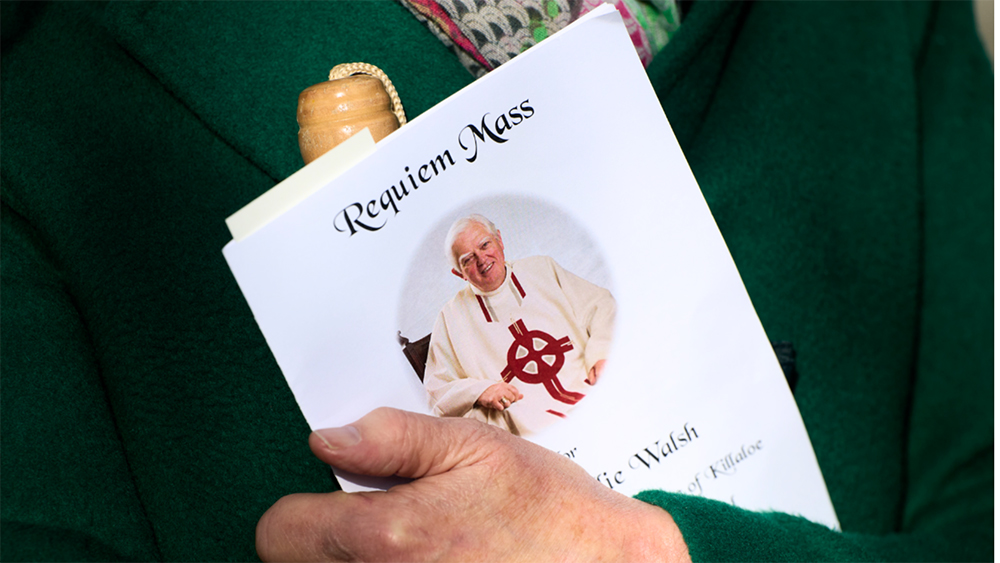
Ours was one of the last audiences during which Pope Francis wasn’t using a wheelchair. As soon as news spread of his death the WhatsApp group of those who had travelled together to Rome, dormant for the past three years, sprang to life again with memories of what was recalled as an “extraordinary privilege”.
The reality, of course, is that because of how generous and self-giving Pope Francis was with his time and presence, people from all parts of the world were extended the same privilege. The greatest tribute we can pay to him is to try to practise in our own lives and service the generosity, courage, determination and other-centredness that characterised his pontificate.
*
Prof. Eamonn Conway is a priest of the Archdiocese of Tuam and Professor of Integral Human Development at the University of Notre Dame Australia.