The belief that we are created in the image of God does not mean that he has brown hair, blue eyes, or the body of a rugby player. It is the ability to reason, writes Peter Kasko.
We are creatures of habit, and as such, we sometimes operate on autopilot. What I mean is, we might be devout in saying our prayers or the rosary daily, yet we might still hate our neighbour, maybe for a reason we have long forgotten. Or we attend Mass every day but have a grudge so deep with our parents or siblings that reconciliation seems impossible. Finally, we all take part in welcoming Jesus with open hands, shouting: ‘Hosanna, Son of David!’ Yet, with the very same breath, less than a week later, we join with the ‘mob’, clamouring to cry out, ‘Crucify Him’. The louder, the better. We must acknowledge that, at some point in our lives, we have been part of both the welcoming and jeering crowds. At other times, we are like the scared apostles who ran away, or the ‘Peters’ who denied Him, or the soldiers who nailed Jesus to the cross. These examples lead to one conclusion: we might be broken and sinful but that is not our identity.
Weakness
The weakness that we have inherited through original sin is supernatural in nature and, as such, needs a supernatural means of healing. “For God so loved this world, that he gave His only Son,” (John 3, 16). Looking at the time that has passed and the world around us, one might ask: did God make a mistake? The plan of salvation, (as theology understands it) does not have a simple one- or two-line explanation. It is a mystery for a reason. And yet, we all understand the answer to be rather simple: the answer is love. And the purest form of love is sacrificial. What does that mean? The apostle Paul sums it up precisely when he says to Galatians that “it is no longer I who live, but Christ who lives in me. And the life I now live in the flesh I live by faith in the Son of God, who loved me and gave Himself for me.” Clearly, a convert like Paul must have been hit hard to make a U-turn of such proportions in his life. What do I need to encounter to get a conversion like that? Even cradle Catholics can go through a conversion in the spiritual sense – whether through enlightenment, insight, or simply being deeply touched by an experience.
Rest assured; God makes no mistakes. The few examples in the Bible where we read of God either regretting or repenting do not mean that God is imperfect. Rather, we understand it as God’s way of expressing his thoughts and responding to human actions, our actions, in a way that is understandable to us. The belief that we are created in the image of God does not mean that he has brown hair, blue eyes, or the body of a rugby player. It is the ability to reason, to think rationally. The likeness to God is in the ability to know, to be aware, perceive or reason and to pass judgment.
The true God is not one of many beings in the world He created. God is outside of this ‘box of time and space’ – He is the creator of that box”
Here, we can easily fall into a common mistake. Bishop Barron succinctly explains that in the modern day we have a deep confusion as to who God is. He says that we may be thinking of God as “the highest being” among many others. As such, we see God as thinking and acting like we do and expecting Him to act or react in the way we easily comprehend. However, this could not be further from the truth. The true God is not one of many beings in the world He created. God is outside of this ‘box of time and space’ – He is the creator of that box. Once we accept that God operates outside of our human norms, we can easily understand that for God to communicate with us, God needs to lower Himself to our level. A human analogy would be an adult speaking to a child, carefully choosing their words; otherwise, the message may be lost.
So, what does God really mean when He claims to regret or repent? Simply put, God is responding to the choices of people, choices you and I are presented with, and expressing His sorrow over the consequences of our decisions, our ‘rebellion’. In the book of Samuel, Saul had a choice to make, and he decided to rebel against God. Similarly, we find ourselves in everyday situations where we choose sin over the infinite love of God. Here, God’s sorrow is over sin and that we have chosen to stray away from him, considering his ever present and constant love and justice (James 1, 17).
Lent
As I write this, we are approaching the fourth Sunday of Lent. Sometimes known as Laetare Sunday, it is one of only two times in the liturgical year when the Church uses rose (pink) as a liturgical colour (the other being Gaudete Sunday during the Advent). The name is derived from the opening words of a hymn from Isiah 66, 10: “Laetare O Jerusalem, or Rejoice! Jerusalem!” We, as the pilgrim Church on Earth, are called to ‘Rejoice!’ even in the Lenten period leading up to the crucifixion of Jesus Christ. But what is there to ‘be happy about’?
The final chapter of the book of Isaiah was delivered after the Babylonian exile, and after the rebuilding of the temple in Jerusalem. The prophet is inviting everybody, native and sojourner alike, to celebrate the return of the nation, to celebrate the freedom gained from captivity.
For us, in the context of Laetare Sunday, we are invited to celebrate the paschal mystery in its entirety – the Passion, Death and Resurrection of our Lord, Jesus Christ. What a beautiful image! This is the means of supernatural healing, the answer to both original sin and our personal sins, made possible through the saving work of the Son of God. God makes no mistakes.
The Christian message is a clear message of Hope. During this Lent we are all invited to search for the meaning of this word. The Gospel passage for Laetare Sunday, the Parable of the Prodigal Son is one such example, and it is overflowing with hope. God invites us all back to Him, no matter our circumstances or how deeply we have fallen into sin. He awaits us with open arms and an open heart, overflowing with love and compassion. To use the words of Luke in the Gospel: “Son, you are always with me.” And THAT is our identity – beloved sons and daughters of our heavenly Father.
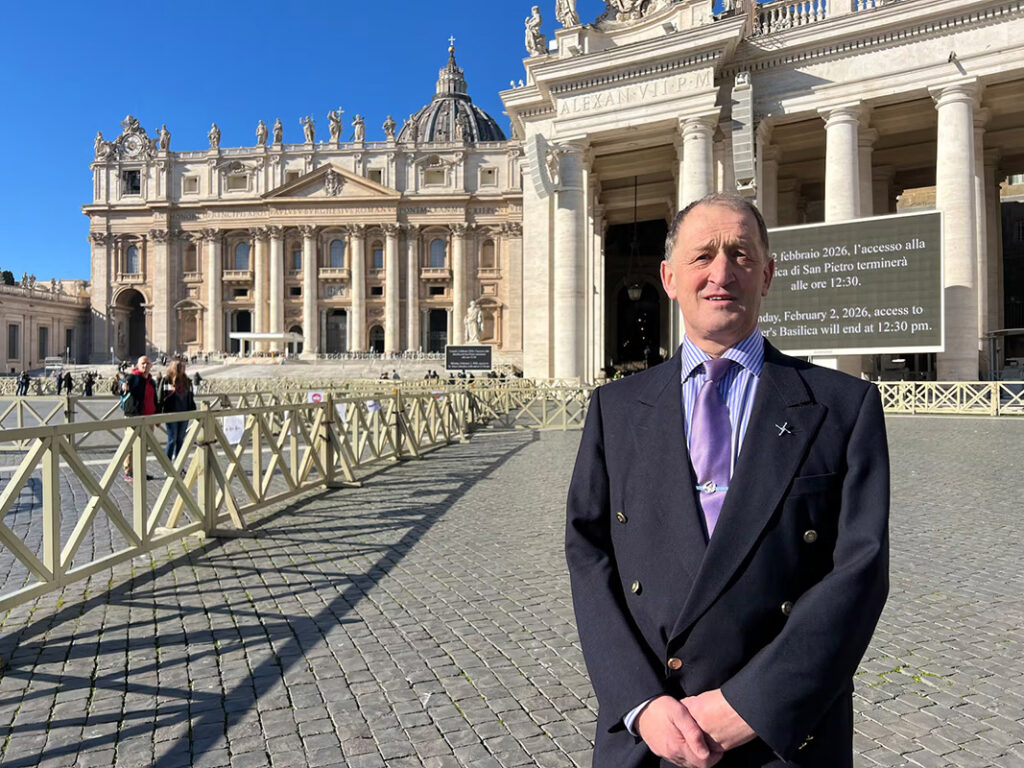
Peter Kasko is a core team member of Living Water prayer group,which meets every Wednesday at 7:15pm in St Teresa’s Church, Clarendon Street, Dublin, and has a passion for Theology and Patristics.