There is so much aggravational division in the world. Some of it due to identity politics, but a related problem is labelling – instead of seeing people as complex individuals, made in the image of God, we prefer to label people. This is particularly problematic when it comes to children – sometimes doing it for their own good to access services, sometimes with the effect of locking them into certain behaviours, expectations and groupings when we should just let them be themselves and develop at their own pace.
These thoughts were prompted by an item on Brendan O’Connor (RTÉ Radio 1, Saturday). In this case the issue was medical labelling and over-diagnosis, as O’Connor interviewed Dr Suzanne O’Sullivan, about her new book The Age of Diagnosis: Sickness, Health and Why Medicine Has Gone Too Far. He said the interview would be challenging and stressed the high qualifications and bona fides of the author (“hugely respected expert”). She had issues with over-diagnosis, over-medicalisation of problems that didn’t benefit from it. She was concerned about the long-term effects of such labelling. The problems related to issues like depression (in some cases it was just a mild sadness being given a medical label), ADHD and autism, where again people with mild traits were being placed on the spectrum. Likewise, she saw the dangers of over-screening including in relation to Downs Syndrome. The item did cause a bit of a stir – with texters strongly agreeing and disagreeing. It was discussion worth having and considerable food for thought – listen back!
So, we go from under-medicalising certain problems, effectively neglecting them in the past as Dr O’Sullivan pointed out, to over-medicalising – we tend to be wedded to the pendulum effect. Why is moderation not more popular? So, it seems to be with the swingeing cuts to US foreign development under the new Trump administration. Defenders of the cuts point to wasteful spending on dubious ideologically driven projects that had flown under the radar, mostly involving Diversity Equality and Inclusion (DEI) projects. Critics of the cuts point to worthwhile medical and anti-poverty programmes in the developing world. Surely a more nuanced and measured review of wasteful and unwise spending would have been in order, instead of the slash and burn approach of DOGE (Dept of Government Efficiency) under the loose cannon approach of Elon Musk.
This was one of the topics on Our Divine Sparks (RTÉ Radio 1, Friday). Hospice volunteer Miriam Donoghue spoke of the news of cuts coming like a “thunderbolt”, causing confusion and panic. Patients were in danger of being left without lifesaving medication e.g. the retroviral drugs that relate to treatment of HIV. “This is a death sentence” said one of the patients. She referenced Catholic Relief Services, a partner of US Aid, who said “the timing couldn’t be worse”, with vulnerable communities facing neglect. The Jesuit Relief Service that helps refugees fleeing from conflict in the Democratic Republic of Congo has also had to curtail operations. There was a sense of a lifeline cut and progress ser back. Presenter Dearbhail McDonald summed up – “an uncertain future for the fragile continent of Africa”. Last Monday on Morning Ireland (RTÉ Radio 1) a related item on the ‘It Says in the Papers’ slot referred to South Sudan and how cuts in US Aid threatens to affect cholera treatment there, with the likely loss of many lives.
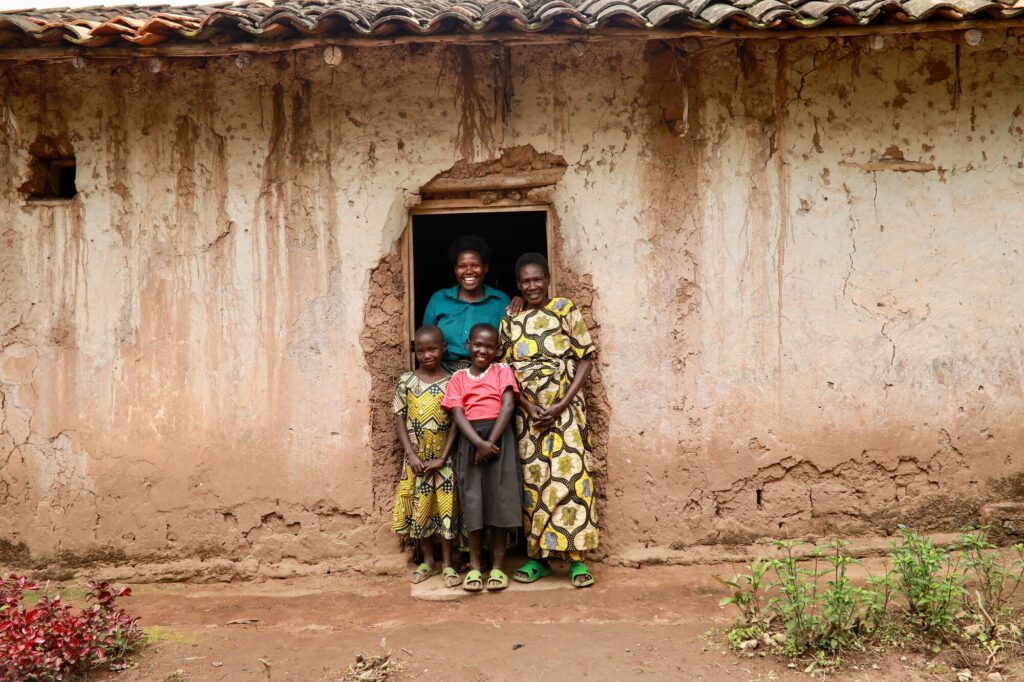
Unreported World (Channel 4, Wednesday) focused on a huge humanitarian crisis in the southern part of Sudan, where refugees are fleeing to avoid the latest war between Government troops and rebels, with both sides being accused of war crimes. Starvation is the worst problem here, in the Nuba mountains, and frustratingly this is no natural disaster but a man-made crisis. It was described as an ‘unreported’ crisis – so much media attention goes to Ukraine and Gaza. We heard from a brave doctor, Tom Catena, struggling to cope with limited resources in the Mother of Mercy Hospital run by the Diocese of El-Obied. A nurse, Nafisa Abdulrahim, herself a refugee with her own children, tried to give the best care she could. At ‘Our Father’s Cleft’, a Church-run boarding school and children’s home, , staff under director Ezekiel Ayub, gave a better life to the most vulnerable children, and they certainly seemed happy – singing, dancing and learning.
Presenter Krishnan Guru-Murthy finished with a grim summary: “people here are suffering and the world is looking the other way.”
Pick of the week
Faith and Life
EWTN Sunday March 30, 9am
Host Campbell Miller speaks with Fr Richard Gibbons, the Rector of the Knock Shrine in Ireland which was built in commemoration of the approved apparitions of Our Lady in 1879.
The last priests in Ireland
RTÉ 2 Tuesday (night) March 1, 12.40am
Actor and comedian Ardal O’Hanlon examines the role of Catholic priests in Irish life, from earliest times to the present day, to see how they shaped Irish lives. Repeat.
Son of a Critch
RTÉ 1 Friday March 4, 8pm
The Pope comes for a rare visit but, sadly, Mark is too sick to attend the outdoor Mass. Nostalgic Canadian comedy series
Music