There is a fellow by the name of Marc Andreessen you have almost certainly never heard of. I hadn’t until recently. He is one of those tech wizards who are present basically at the founding of the internet when he was only in his twenties. He helped to set up one of the first big internet browsers, namely Netscape. He also provided some of the seed capital for Facebook.
Today, he is worth about $2 billion, and he is still only 53. Andreessen knows Silicon Valley from the inside out, that is, the California-based epicentre of most of the world’s most important technological developments, and he also knows American politics inside and out. This is a man who knows about the ideological battles for the heart and soul of Silicon Valley and how this battle helps to shape how the rest of us think, including you and me, even when we are not aware of it.
Censoring
Anyway, I mention Andreessen because he recently gave a very important interview to Ross Douthat, a columnist with the New York Times. Douthat is another name it is worth your while remembering. The New York Times is one of the most important and influential papers in the world, and Douthat is the newspaper’s ‘token’ Catholic writer. He happens to be an excellent commentator, a brilliant analyst of social, political and religious trends, and a conservative, but a moderate one, in his basic outlook. He is also the author of several books, his latest being Believe: Why Everyone Should Be Religious.
A so-called ‘content moderator’ decided this was ‘violent and graphic content’”
Douthat interviewed Andreessen last month, just before Trump began his second term as American president because Andreessen had switched from being a Democrat supporter to a Republican one and he explained his reasons why. The big one was the non-stop bullying of the tech companies by the Biden Administration.
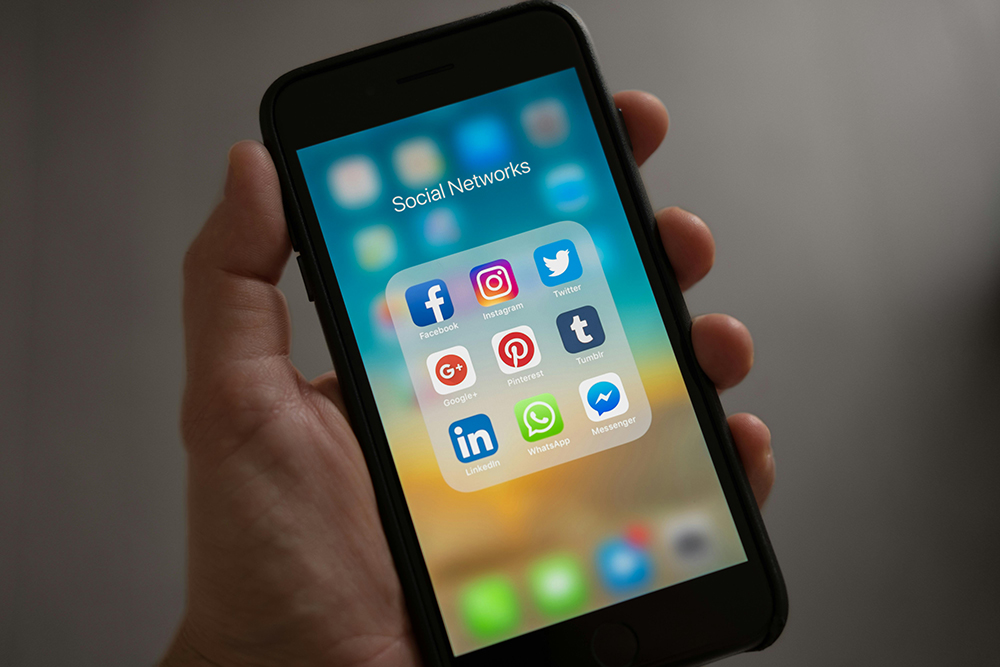
But what I found interesting is that the interview confirmed what a lot of us have long suspected, which is that the big social media companies like Facebook, and Twitter (before Elon Musk bought it) were basically censoring opinions liberal Americans did not like, and while he did not go into what was happening outside of America, the same thing has been happening on this side of the Atlantic as well.
I can confirm this from personal experience. As Dualta Roughneen explains at greater length elsewhere in this newspaper this week, both Facebook and Twitter banned The Iona Institute (which I run) from advertising on their platforms for no good reason.
Facebook did it because we were trying to run an ad on the first anniversary of the abortion referendum showing an 11-week-old baby in the womb with the caption ‘Still One of Us’. Incredibly, a so-called ‘content moderator’ decided this was ‘violent and graphic content’ and banned us totally from advertising without any right of appeal.
Fortunately, I managed to get a little media coverage about the Facebook decision and the ban was overturned. It is not like The Iona Institute will ever have a big social media advertising budget, but it would be nice to do some advertising.
Biases
Around the same time Twitter banned us because we tried to advertise a video about the good Catholic organisations do all over the world. We were banned by another totally anonymous ‘content moderator’ (a censor, in fact), even though organisations like Atheist Ireland were still allowed to advertise on the platform. The bias of the content moderators should be immediately apparent.
Only in the last couple of weeks have we managed to get this ban lifted, because Musk-era Twitter (‘X’) is less censorious than it was. And even if you think that ‘X’ has become too much of a free-for-all, the decision to ban The Iona Institute from advertising was never remotely justifiable.
They wanted the world to be much more socialist”
In his interview with Douthat, Andreesen confirms that the tech companies have long had a very strong liberal bias, but this got much worse from around 2012 as a new wave of ultra-radicalised graduates from America’s leading universities came to work in Silicon Valley determined to use the tech companies as a vehicle to change the world in their image. Something similar was happening on this side of the world.
These graduates entered university around 2008 when the financial crash happened, and left from 2012 on. The crash made them extremely anti-capitalist. They wanted the world to be much more socialist. This was the start of what has been called ‘The Great Awokening’, and it is the time when censorship of ‘unacceptable’ opinions went into overdrive.
As Andreessen says in the interview: “By 2013, the [average] newly arrived Harvard kid was like: “[expletive] it. We’re burning the system down. You are all evil. White people are evil. All men are evil. Capitalism is evil. Tech is evil.”
He recounts a senior executive in Silicon Valley saying to him: “I think some of these kids are joining the company not with the intent of doing things for us but destroying us.”
Basically, the Democrat-supporting people running Silicon Valley had suddenly employed a whole lot of young people who were much more radical, much more hard-line and far more militant than they were.
Things became worse when Covid broke out. Joe Biden came into office in 2021, less than a year after Covid upended our lives and the big tech companies found themselves being bullied from the inside by their own employees, and by the American Government. One major example of censorship was taking down posts speculating that the virus might have originated in a lab in Wuhan that was expressly experimenting on coronaviruses. That theory is actually extremely plausible.
The bullying became so bad, that after one meeting with White House officials, Andreessen and one of his business partners “stood in the parking lot of the West Wing [of the White House] and took one look at each other, and we’re like, ‘Yep, we’re for Trump.’”
For the Biden Administration to push people who are natural Democrat supporters into the arms of Donald Trump is absolutely extraordinary.
Regime
This only happened because both the internal and external regime of censorship forcing itself on the social media giants had been so bad, so suffocating, so extreme. When it enveloped a tiny organisation like The Iona Institute for running perfectly reasoned ads, you can see how bad it got.
And it’s not over. Who knows who is still doing ‘content moderation’ in the Facebook head-office in Dublin? What posts are still being made less visible than others?
But things have improved. The question is whether or not there will be an eventual return to the intense censorship of very recently. A lot depends on the answer to this. Will there be an even playing pitch for everyone who wants to take part in public debate rather than a continual bias in favour of the ‘liberal’ side, starting with the mainstream media and extending into social media?