The Netflix mini-series Adolescent was the most talked about one of the year. It raised all sorts of questions about peer pressure, cyber-bullying, toxic masculinity and what children get up to when they’re not being monitored by their parents.
The King of Kings told the story of Christ’s life in animated form using a neglected Charles Dickens text to fuel the dynamic of a young boy becoming immersed in it after initial reluctance.
In Good Fortune Keanu Reeves charmed as an angel brought down to earth – literally – as he tries to make a point about society’s financial inequities.
Oh My Goodness was an amusing French film about a group of nuns entering a bicycle race to raise funds for the renovation of a hospice.
Sequels to sequels are usually dead on arrival. Danny Boyle’s 28 Years Later was an exception to that rule.
My Dead Friend Zoe, exploring the guilt of a soldier over the death of her colleague in Afghanistan, shone a light into the world of PTSS as well as the more obvious physical scars of war.
Maria Delpero’s period drama Vermiglio was entrancing, as was Laura Carreira’s ode to loneliness, On Falling.
Steven Soderbergh made a welcome return to form in the comic caper Black Bag starring Michael Fassbender as a spy who suspects his wife (Cate Blanchett) of being a mole.
Despite its title, The Final Reckoning showed that the Mission Impossible franchise can still pack ‘em in. And before you say, “It’s time Tom Cruise got his P45,” remember that he may well be ‘The Last Star On The Planet’.
The Robert Pattinson film Mickey 17 was an interesting black comedy about an attempt to colonise space. Pattinson also turned up in Die My Love, giving an all-stops-out performance opposite the equally intense Jennifer Lawrence as a woman on the edge.
The remake of How to Train a Dragon wasn’t everyone’s cup of tea, but people who liked it liked it a lot. The Phoenician Scheme had Wes Anderson employing his typically stellar cast eccentrically. The problem was that, like many Anderson films, it was overstuffed and uneven. His near-namesake Paul Thomas Anderson enthralled with One Battle After Another.
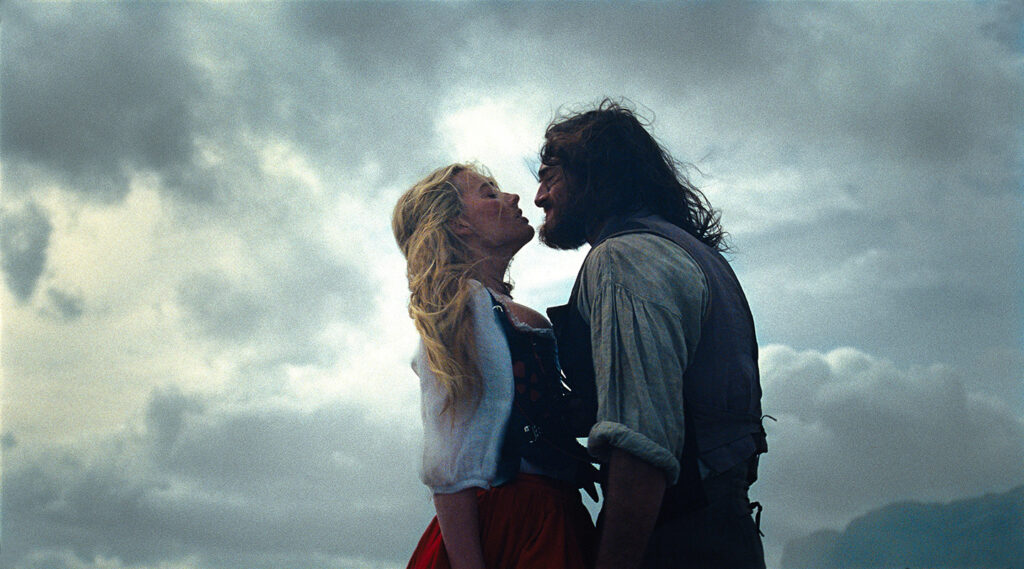
The Brutalist was an absorbing epic about an architect fleeing Europe for America in 1947. Nicolas Cage captured the breakdown of a yuppie with conviction in Danny Boyle’s The Surfer, but after bringing us to the seventh circle of hell, Boyle didn’t seem to know what to do next – a familiar problem with him.
Blockbusters were in evidence during the year with Superman, Jurassic World: Rebirth and The Fantastic Four. The warp and weft of familial tensions featured poignantly in A Real Pain, Jesse Eisenberg’s film about bickering cousins on a trip to Poland to seek out their origins
When a film calls itself A Normal Family, expect irony in the title. Such was the case with this Korean curiosity from Hur Jin-Ho.
Cillian Murphy gave his usual 110% in Steve, playing a harassed teacher in a reform school. Bob Trevino Likes It was a delightful coming-of-age comedy.
I didn’t think it was a good idea for Robert De Niro to play two roles in The Alto Knights, but the film itself was an intriguing depiction of the Italian Mafia in the 1950s and 1960s.
Robert Eggers directed a stylised version of Nosferatu with Bill Skarsgard as the eponymous vampire. Nia DaCosta’s re-imagining of Ibsen’s Hedda was less successful.
There were interesting films about real people like Maria Callas (Maria), Leni Riefenstahl (Riefenstahl), Kenny Dalglish (Kenny Dalglish) and the Edna O’Brien documentary, Blue Road.
Rom-com lovers adored Celine Song’s Materialists. With Hard Truths, Mike Leigh proved he still had it. Sinners combined themes of vampirism and folk music in an eclectic mix.
Flow was an absorbing animated fable about a cat leaving its home after a flood and finding unusual friends on a boat. James Griffiths delivered a knockout punch with the bittersweet Ballad of Wallis Island.
The most terrifying film of the year was probably Bring Her Back, largely due to Sally Hawkins’ eerie turn as the foster mother from hell.

Festival. Photo: Wikimedia Commons / Gabriel Hutchinson.
A number of musical documentaries came our way – Sly Lives, Deliver Me From Nowhere, Becoming Led Zeppelin, Spinal Tap: The End.
Anyone who reads this column will know I’m a fan of Derek Cianfrance. He didn’t disappoint with Roofman, expanding a crime story into an extra dimension.
I couldn’t warm to the central character of Sorry, Baby. That meant I wasn’t as invested in the trauma of writer/director Eva Victor as I was expected to be. Maybe the problem was that she was wearing two hats, which led to some special pleading.
Naked Gun started well, but then trailed off badly, making you think the rebooting of a once-hilarious concept isn’t always a good idea.
I loved Christy, a story of brotherly love set against the backdrop of an Ireland struggling with drugs and broken lives. It was a ‘glass half full’ depiction of this, unlike Amongst the Wolves, which adopted a scarier perspective on a similar scenario.
My warm feelings about The Salt Path took a tumble after revelations emerged about the homeless couple in the film being less than truthful about some of their experiences on a walk they took around England’s south-west coast.
September 5 told a story we all knew well, the hostage crisis at the 1972 Olympics, but from a novel purview – the press box.
Colin Farrell had a busy year with A Big Bold Beautiful Journey” and Ballad of a Small Player. As well as showing great versatility in these roles he continued to emerge not only as one of the nicest guys in films but also one of the most caring.
On the first day of the year I learned that the marriage of Brad Pitt and Angelina Jolie was finally dissolved after eight years of negotiations. The marriage itself lasted two.
Says it all about Hollywood liaisons.
Festival. Photo: Wikimedia Commons / Gabriel Hutchinson.